Subfloor Odor Sealing Service (When Cat Urine Smell Won't Go Away)
You’ve already tried everything. You’ve pulled up the carpet, scrubbed the subfloor with enzymes, ran an ozone machine for days, maybe even paid someone to “deep clean” it. The smell went away for a week… then came back. Or it never really left.
If you’re reading this, you’re probably not looking for another product recommendation. You’re looking for someone who actually understands what’s happening under your floor and knows how to fix it permanently.
.
Subfloor Odor Sealing Service (When Cat Urine Smell Won't Go Away)
You’ve already tried everything. You’ve pulled up the carpet, scrubbed the subfloor with enzymes, ran an ozone machine for days, maybe even paid someone to “deep clean” it. The smell went away for a week… then came back. Or it never really left.
If you’re reading this, you’re probably not looking for another product recommendation. You’re looking for someone who actually understands what’s happening under your floor and knows how to fix it permanently.
Why Cat Urine Smell in Subfloors Is Different (And Why Normal Cleaning Doesn't Work)
Here’s what most people don’t realize: your subfloor was never meant to get wet.
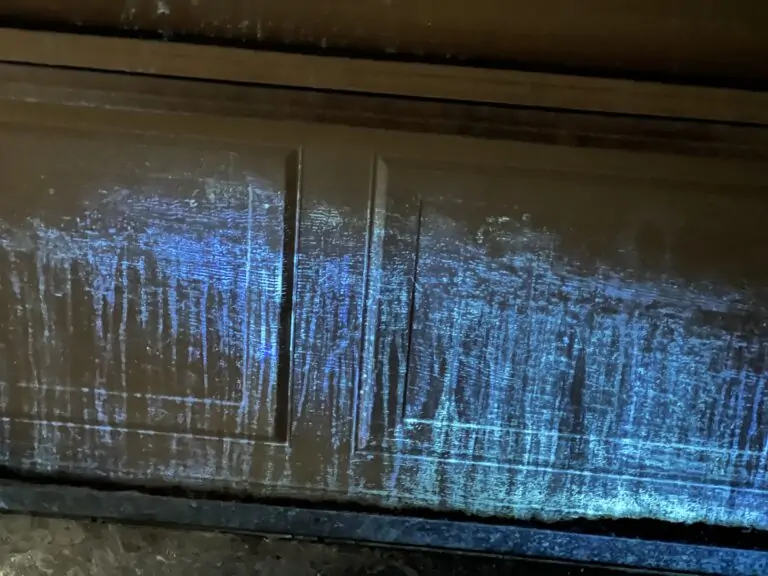
Plywood and OSB (oriented strand board) are bare wood products. No finish, no seal, nothing protecting them. When cat urine soaks through carpet and pad, it doesn’t just sit on top of the plywood it absorbs into the wood fibers, seeps into the seams between sheets, and follows the grain. Think of it like a paper towel soaking up water. Once it’s in there, it’s in there.
The worst part? Every time you pour more liquid on it even enzyme cleaner you’re pushing that contamination deeper and wider. You’re not cleaning it out. You’re spreading it around and keeping the wood damp, which is exactly what keeps the smell active.
This is why people call us after they’ve already:
- Soaked the subfloor with gallons of enzyme cleaner (Nature’s Miracle, Rocco & Roxie, Anti-Icky-Poo, you name it)
- Tried vinegar, baking soda, hydrogen peroxide, or “secret formulas” from the internet
- Run ozone generators, hydroxyl machines, or chlorine dioxide bombs
- Had the carpet cleaned professionally 2-3 times
- Replaced the carpet and pad… only to have the smell come back through the new flooring
None of those things are “wrong” exactly. They’re just not designed for urine that’s embedded in wood. And that’s the real problem.
The Most Common Searches We See (And
What They Really Mean)
Removed carpet and urine smell got worse
I thought pulling up the old carpet would fix it. Now the smell is stronger and I can see urine stains all over the subfloor.
Bought a remodeled house that smells like dog urine
The house looked perfect new flooring, fresh paint. Then I pulled up the laminate and found urine stains everywhere underneath.
Pulled up carpet and found hardwood floors covered in urine stains
I thought I was getting original hardwood. Instead I found dark stains, discoloration, and odor that won’t go away.
Professional urine odor removal service near me
I’m done trying to fix this myself. I need someone who actually knows what they’re doing.
Subfloor odor removal for real estate sale
I’m trying to sell and the inspection came back with odor issues. I need this fixed before closing.
New flooring installed but cat urine smell still comes through
I thought replacing the carpet or installing LVP would solve it. But the odor keeps coming back, especially when the room warms up or humidity changes. I need the source under the floor fixed, not just covered.
Areas We Serve
We proudly serve all of California, including:
We also serve Arizona, Nevada, and other nearby states by special request.
Get rid of pet urine odor the right way! OdorXpert ™ Pet Odor Removal Service
OdorXpert ™ removes stubborn pet urine odors using advanced tools and proven methods, ensuring your home is clean, fresh, and ready to live in or sell. Contact us today.
Trustindex verifies that the original source of the review is Google. Jody came over to give his expert investigation and assessment of the situation. I appreciated his timely response and expertise in this area.Posted onTrustindex verifies that the original source of the review is Google. Jody and his team were amazing! They went above and beyond to eliminate years of cigar smoke damage in our clients loft- highly recommend!Posted onTrustindex verifies that the original source of the review is Google. In freaking credible! Great crew. Expertise in every problem. Living room has never looked better. SMELL ANNIHILATED!Posted onTrustindex verifies that the original source of the review is Google. PORS is hands down the best pet odor remediation service. We had tried various clean up and remediation services and to no avail nothing worked. The issue needed a real pro. The PORS team was fast to coordinate a thorough inspection and they delivered on their promise of 100% remediation. 10/10 would recommend.Posted onTrustindex verifies that the original source of the review is Google. Recently was overwhelmed with the smell of pet urine all over my moms lovely home. I could not even bear to visit her any longer. We decided to address the issue ASAP and luckily found Jody and Pet Odor Removal Service on line. They were super responsive, a pleasure to work with and did a fantastic job moving everything out of the house addressing all problem areas, redoing the floors, then efficiently putting everything back in its place minus that god awful smell. In just a few days the home was fabulous with no smell thanks to Jody and team. I highly recommend them !Posted onTrustindex verifies that the original source of the review is Google. I recently used Pet Odor Removal Service to address a persistent cat urine issue in our newly purchased house, and I couldn't be more pleased with the results! From start to finish, the experience was exceptional. Jody, the owner, was incredibly professional and attentive. He took the time to explain the entire process and answered all my questions thoroughly. His expertise and dedication to customer satisfaction were evident from our first interaction. The team of employees was also fantastic. They arrived on time, were courteous, and worked efficiently. Their attention to detail was impressive, ensuring that every trace of cat urine odor was eliminated. They not only remediated the issue but also put everything back together as it was before. What truly stood out was their dedication. Despite the long drive, Jody and his team made multiple trips to ensure the issue was completely resolved. Their commitment to making things right was evident in every aspect of their service. Customer service was top-notch. Jody and his team went above and beyond to ensure I was satisfied with the service. They were friendly, approachable, and genuinely cared about delivering excellent results. I highly recommend Pet Odor Removal Service to anyone struggling with pet odors. Their professionalism, effectiveness, and outstanding customer service make them the best choice for odor removal needs. Thank you, Jody and team, for your excellent work!Posted onTrustindex verifies that the original source of the review is Google. I highly recommend. The workers are knowledgeable and professional.Posted onTrustindex verifies that the original source of the review is Google. We hired Jody and Pet Odor Removal Service (PORS) to address a house with terrible cat urine odor and feces damage throughout the house. PORS provided us a thorough inspection report beforehand which provided us with a clear understanding of the problem and a roadmap on how they would address it. In the end, they successfully rid the home of the odor and we could not be more pleased with the results. Additionally PORS was asked to clean out another hoarder home and completed that task in short order and as promised. We could not be more pleased with this very professional service and will recommend them at every opportunity.Posted onTrustindex verifies that the original source of the review is Google. Jody and his team transformed my garage. I give them a 20/10 and highly recommend them to anyone!
Where the Smell Actually Hides (And Why You Keep Missing It)
Cat urine doesn’t damage a subfloor evenly. It concentrates in specific zones—and contrary to what some people think, cats don’t just pee in one spot. They pee and spray along walls, in corners, AND in the middle of the floor (usually when a litter box has been in that spot or when they’re marking territory).
1. The Perimeter (Tack Strip Line and Wall Edges)
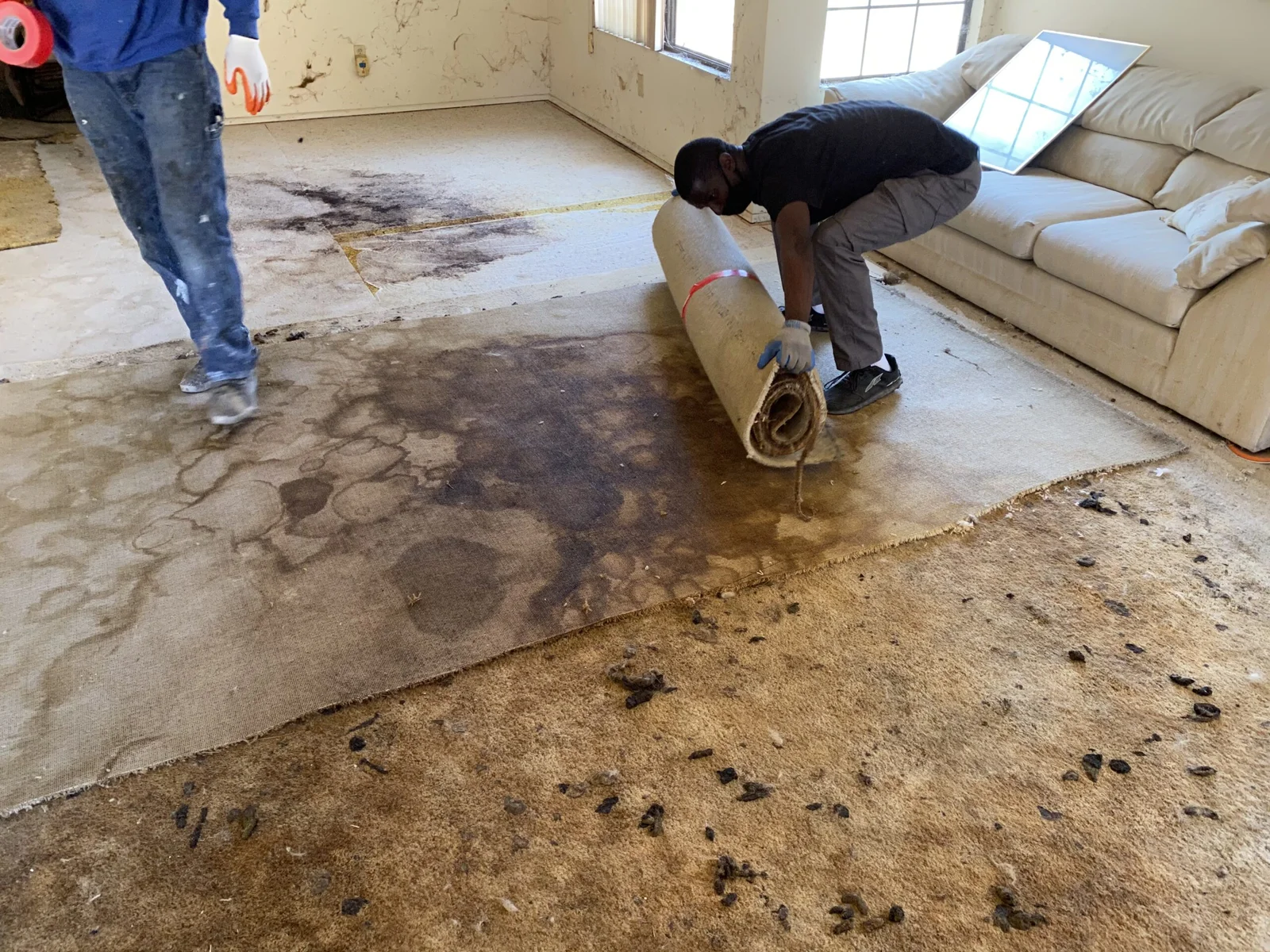
This is the #1 problem area we see. Cats have a strong tendency to urinate and spray along the edge of the carpet right where it meets the wall. The carpet padding is usually set back about 1 1.5 inches from the wall, which leaves a gap. Urine soaks through the carpet, hits the tack strip, and drips straight down into the subfloor edge. Even “pet-proof” moisture-barrier pad doesn’t help here because the pad doesn’t extend all the way to the wall.
2. Center of the Floor (Litter Box Zones and Marking Areas)
Cats also pee and defecate in the center of rooms—usually where a litter box used to be, or in areas they’ve claimed as their own. When the litter box gets moved or removed, cats sometimes continue using that same spot. Or they mark the area around the box when they’re stressed. This is why you’ll often see contamination in the middle of a room with no obvious explanation until you realize that’s where the litter box sat for years.
3. Corners and Closets
Cats instinctively mark corners. If you have a closet that smells worse than the rest of the room, or a back corner near a window or baseboard heater, that’s why. Corners are territory markers.
4. Door Jambs and Transitions
Urine runs along seams and edges. Doorways, where flooring changes from one room to another, become collection points. We often see contamination under door jambs that’s been there for years especially in bathrooms, laundry rooms, and bedrooms where cats have access.
What About “Pet-Proof” Carpet Padding?
Moisture-barrier padding (the kind with the plastic layer) can helpbut only if it’s installed correctly, and only if the cat doesn’t pee along the edges.
When it works:
- The seams between pad sections are taped with moisture-proof seam tape (not regular duct tape)
- The installer doesn’t staple through the pad into the subfloor (staples punch holes in the moisture barrier)
- The edges are handled carefully so urine can’t bypass the barrier
Why cats still beat it:
Cats don’t pee in the middle of the room. They pee along edges and corners exactly where the pad is set back from the wall. The barrier pad protects the center of the floor, but it leaves a 1–1.5 inch gap around the perimeter where urine has a direct path to the subfloor.
So yes, it’s better than regular pad. But it’s not foolproof.
Why Ozone, Chlorine Dioxide, and Hydroxyl Generators Don’t Fix Subfloor Odor
We get calls every week from people who’ve already run ozone generators, chlorine dioxide gas treatments, or hydroxyl machines. Sometimes for days. The house smells better for a while, then the odor comes back.
Here’s the truth: Those machines treat odor in the air. They don’t treat odor embedded in materials.
Ozone and similar oxidizers can neutralize odor molecules floating around in the room. That’s useful for smoke smell, skunk spray in the air, or surface-level contamination. But when the source is urine soaked into plywood deep in the wood fibers and seams these gases can’t reach it. They don’t have the pressure or penetration to get inside building materials. And if the subfloor is still damp from cleaning attempts, the gas can’t work anyway.
So you get temporary relief. The air smells better. But the source is still there, and as soon as the home heats up or humidity changes, the odor starts off-gassing again.
Bottom line: Air treatments are not source treatments. If the problem is in the wood, you need to deal with the wood.
The DIY Products Everyone Tries (What They’re Actually Good For)
Let’s be honest about what works, what doesn’t, and where people get into trouble.
Vinegar
What it’s good for: Fresh urine on fabrics, sofas, wool rugs, carpet (before it soaks through to the subfloor), linoleum, some laminate surfaces.
Where it fails: Vinegar is acidic. It can help neutralize fresh urine on non-porous surfaces or in fabrics that can handle moisture. But it’s not a structural fix. If the urine is already in the wood, adding more liquid just makes it worse.
Don’t use it on: Concrete. Vinegar can etch concrete and make it more porous, which allows odor to penetrate deeper.
Bleach
What it’s good for: Hard surfaces like concrete, tile, porcelain, sealed walls, some laminate. Bleach kills bacteria and can help sanitize surfaces.
Where it fails: Bleach doesn’t penetrate deep into wood. It lightens stains on the surface but doesn’t remove odor embedded below. And the fumes are harsh especially in enclosed spaces.
Don’t use it on: Carpet, upholstery, or any fabric. Bleach will damage or discolor those materials. Also, never mix bleach with other chemicals (ammonia, acids, etc.) it creates toxic gas.
Enzyme Cleaners
Cats mark doorways. Urine collects at door corners and under thresholds. Even if you’ve replaced flooring, the door jamb and threshold wood can stil
What they’re designed for: Fresh urine on carpet, fabric, upholstery, clothing, tile, or concrete ideally used within hours or days of the accident.
Why people love them: Enzymes break down uric acid crystals (the part of urine that causes odor). When used correctly on fresh contamination, they can work really well.
The reality: Most people don’t discover the problem until weeks, months, or years later. By that time, the urine has dried, concentrated, and soaked deep into porous materials. Enzymes need moisture to activate, so people pour bottles of enzyme cleaner onto the subfloor… which just re-wets the wood and spreads the contamination further.l be contaminated.
Hardwood Floors
Light urine damage on hardwood can sometimes be addressed with careful cleaning and refinishing. You can damp-mop hardwood with vinegar, diluted bleach, diluted ammonia, or enzyme cleaners depending on the finish and the severity.
But here’s the catch: if the odor is coming from the subfloor underneath the hardwood, cleaning the hardwood won’t fix it. The hardwood is just the top layer. The source is below.
Wood Subfloors (Plywood and OSB)
Plywood and OSB should never be soaked. These materials are bare wood. The more you wet them, the worse it gets. The best thing you can do is dry it out completely.
Once it’s dry, light odor damage might respond to shellac-based primer or oil-based primer. But we often see subfloors coated with these products where the old urine stains are bleeding through meaning the contamination is still active and the primer didn’t work.
Climate Matters (What Works in Malibu Won’t Work in Palm Springs)
Here’s something most DIY guides don’t mention: location affects everything.
A subfloor in coastal Malibu stays damp longer because of marine air and moderate temperatures. Odor off-gasses slowly and steadily. The same subfloor in Palm Springs where it’s hot and dry might dry out faster, but extreme heat causes faster and stronger off-gassing. Humidity swings, temperature changes, and airflow all change how odor behaves.
That’s why a product that “worked great” for someone in one climate might fail completely in yours. It’s not that the product is bad. It’s that the conditions are different.
No two urine problems are the same. Different cats, different diets, different subfloor materials, different climates, different contamination levels. What worked for your neighbor might not work for you and that’s normal.
Our Method: Inspect, Dry, Prep, Seal (The Right Way)
When we handle severe subfloor urine odor, we don’t guess. We don’t try another round of enzyme cleaner and hope for the best. We follow a process that’s designed around how building materials actually work.
Step 1: Inspection (So You Know What You're Really Dealing With)
The subfloor is usually the main problem. But it’s not always the only problem. Before we seal anything, we inspect the “near zone” to see what else has been contaminated:
- Baseboards: Cats spray walls. Urine runs down and soaks into the bottom edge of baseboards. If the baseboard is swollen, stained, or soft, it’s not salvageable.
- Drywall: The bottom 1–2 inches of drywall (especially behind baseboards) can wick up moisture and odor.
- Wall Plates (Sill Plate / Bottom Plate): The wooden framing at the base of the wall can absorb urine. This is common in corners and closets.
- Door Jambs: Cats mark doorways. Urine collects at door jamb corners and under thresholds.
We document everything during the inspection so you know the full extent before we start work. No surprises halfway through the job.
Step 2: Access the Source
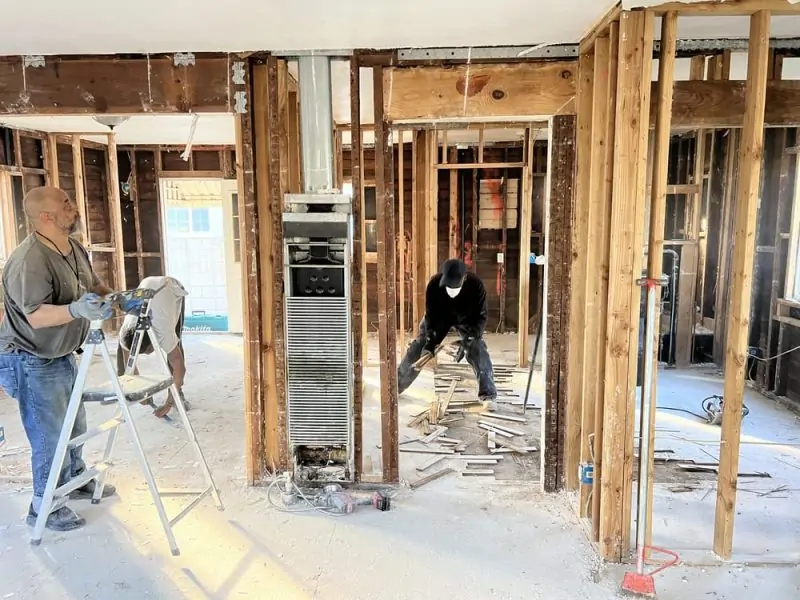
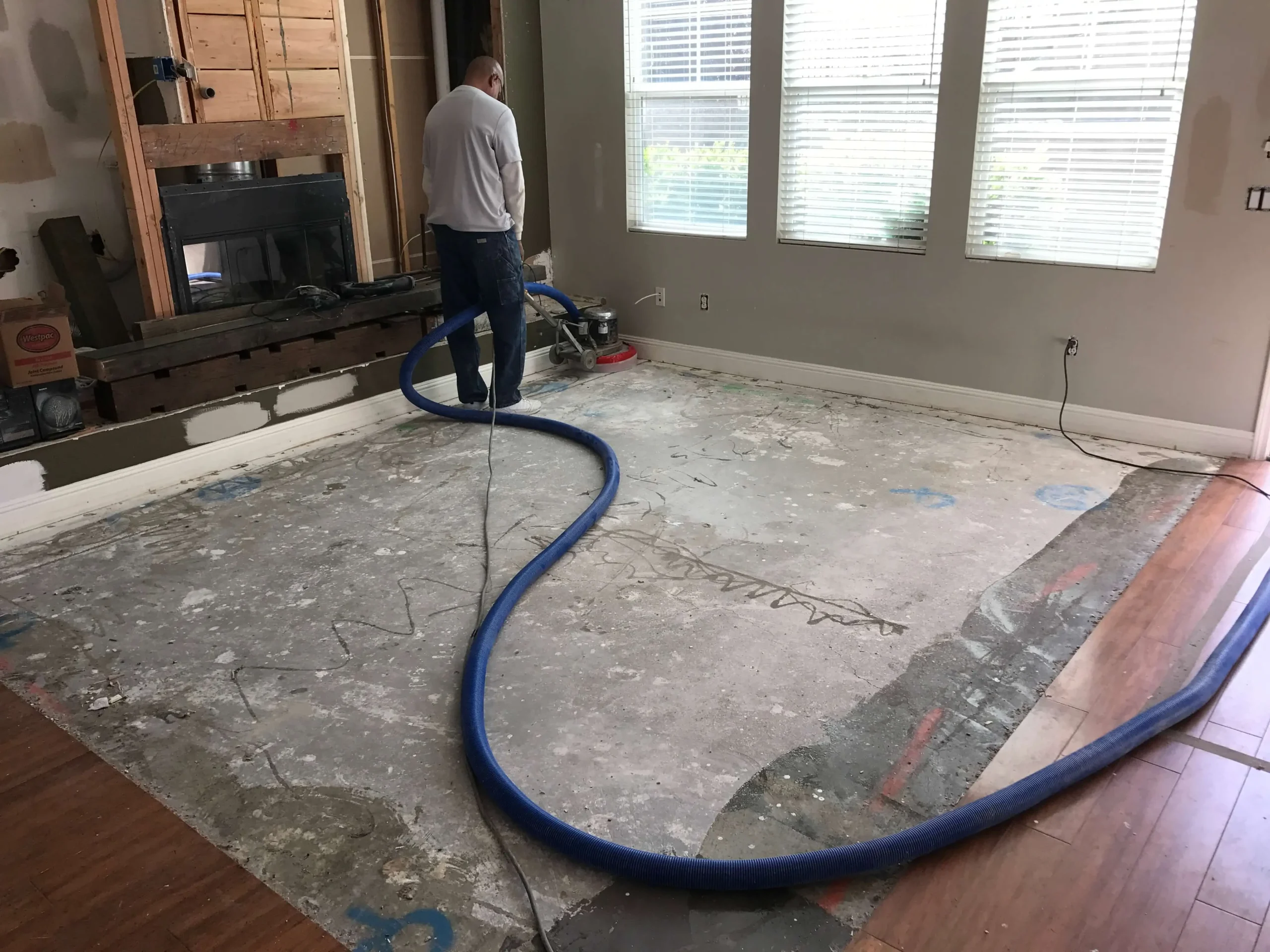
We remove carpet, pad, and any other coverings so we can see and access the subfloor directly. If you have floating floors (LVP, laminate), we remove those too.
Step 3: Dry the Subfloor Completely
You cannot seal a wet or damp subfloor. If you trap moisture under a sealer, you create the perfect environment for mold, continued odor, and coating failure. We verify the subfloor is dry using moisture meters.
Step 4: Prep the Surface (Sand as Needed)
If there are old coatings, enzyme residues, or surface contamination, we sand the subfloor. This removes residues, opens the wood grain for better bonding, and helps control the spread of contamination.
Step 5: Seal with Odor Encapsulator
Once the subfloor is dry and prepped, we apply a specialized odor encapsulation system. This isn’t regular primer. It’s a barrier coating designed to lock down odor molecules and prevent off-gassing.
Step 6: Verify Before Rebuilding
We don’t rush to put new flooring down. We verify the odor is gone and the seal is holding before we button everything back up.
When Subfloor Replacement Is the Right Call
Not every subfloor can be saved. We wish that wasn’t true, but sometimes it is.
Replacement is usually necessary when:
- The OSB or plywood is soft, swollen, or delaminating from long-term saturation
- The subfloor is structurally compromised bouncy, unstable, or separating at the seams
- Contamination is so severe that sealing would just be masking a problem
We make this call based on what the material is actually doing not based on what we hope it will do. If the subfloor is shot, we’ll tell you. If it can be sealed, we’ll tell you that too.
Air Purifiers and Deodorizers
Air purifiers can help with odor molecules in the air, but they don’t remove the source. You’re just filtering the symptoms. As long as contaminated materials are off-gassing, the air purifier will keep running indefinitely without solving the problem.
Sealing Everything with Kilz or Shellac
This is the DIY attempt at odor encapsulation. People paint Kilz or shellac on subfloors, walls, and baseboards thinking it’ll lock in the smell. Sometimes it helps if the contamination is light and the surface is completely dry. But in severe cases, we see this all the time: the entire subfloor is coated with shellac, and old urine stains are bleeding through. That means the source is still active.
Our Method: Inspect, Confirm, Access, Treat, Seal
Severe cat urine odor remediation is not cleaning. It’s structural work. Here’s how we approach it:
Step 1: Inspection and Confirmation
Before we touch anything, we inspect the home to answer these questions:
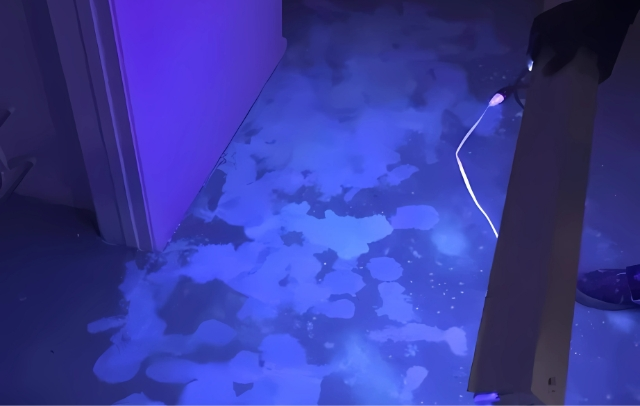
- Which materials are contaminated? (Subfloor? Concrete? Walls? Baseboards?)
- Where is the odor concentrated? (Perimeter edges? Specific rooms? Closets?)
- How far has the contamination spread?
- Are there hidden sources? (Behind baseboards? In wall cavities? Under new flooring?)
We document everything so you know the full scope before work starts. No surprises halfway through.
Step 2: Access the Source Layer
If contamination is in the subfloor, we remove carpet and pad to access it. If it’s behind baseboards, we remove the baseboards. If it’s in drywall or wall cavities, we do selective removal to get to the contaminated area.
You can’t treat what you can’t reach.
Step 3: Dry the Materials
Moisture is the enemy. If materials are damp from cleaning attempts or wicking, we dry them using fans, dehumidifiers, and moisture meters. You cannot seal a wet subfloor or damp drywall it’ll fail.
Step 4: Treat and Prep
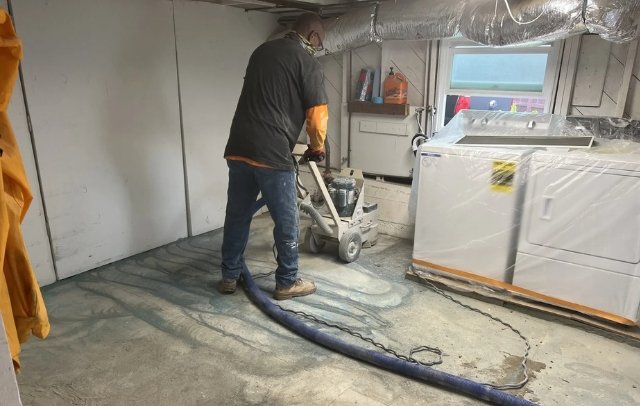
Once materials are dry, we prep them for sealing. This might include sanding subfloors to remove surface residues, cleaning concrete, or removing old failed coatings. The goal is a clean, dry surface that the sealer can bond to.
Step 5: Seal with Odor Encapsulator
We apply a specialized odor encapsulation system to lock down the source. This isn’t regular primer or paint. It’s a barrier coating designed to prevent off-gassing. Once sealed, the contamination can’t release odor into the air even when the house heats up or humidity changes.
Step 6: Verify Before Rebuilding
We don’t rush to put new flooring down or close up walls. We verify the odor is gone and the seal is holding before we finish the job. If there’s any concern, we address it while we’re still on-site.
Real-Life Scenarios We See All the Time
Scenario 1: The Flipper Who Covered It Up
An investor buys a foreclosure, does a quick cosmetic flip (new carpet, fresh paint, new baseboards), and lists it. The buyer doesn’t smell anything during the walkthrough because the house is open and aired out. They close, move in, close up the house, and within a week the whole place smells like cat urine. The odor was in the subfloor the entire time the new carpet just covered it up.
Scenario 2: The Seller Who "Cleaned Everything"
A seller knows there’s a cat odor problem. They hire a carpet cleaning company to deep clean everything. They scrub walls. They replace the worst carpet. The house smells better for a few days. Then the buyer moves in and discovers the smell is still there in the subfloor, baseboards, and drywall edges.
Scenario 3: The Inherited House
Someone inherits a house from a relative who had multiple cats for years. The house is overwhelming. They don’t even know where to start. They try enzyme cleaners, ozone, and air purifiers. Nothing works. They need the house empty and remediated so they can sell it.
Scenario 4: The Rental Property That Won't Rent
A landlord evicts tenants who had cats. The property smells so bad that prospective tenants walk through and immediately leave. The landlord has it cleaned professionally twice. The smell keeps coming back. The property sits vacant for months because no one will lease it.
Scenario 5: The Homeowner Who's Lived with It Too Long
Someone has lived with cat urine odor for years. They’ve tried everything. They’re embarrassed when people visit. They want their house back, but they don’t know if it’s even fixable at this point.
Scenario 6: The Remodeled House That Still Smells
A house was completely remodeled new flooring throughout, fresh paint, new trim. It looks beautiful. But it still smells like cat urine. The contamination is in the subfloor and wall structures underneath all the new finishes. Now the new flooring has to come up to access the source.
Frequently Asked Questions
Read the latest property how-to guides, and information and tips for buying, selling, investing and renting.
Yes. When the odor is embedded in the wood subfloor, the permanent fix is source-layer remediation: inspection, drying, surface prep, and professional sealing (or replacement if the wood is compromised).
Enzyme cleaners are designed for fresh contamination. By the time most people discover the problem, the urine has dried and penetrated deep into the wood. Pouring enzyme cleaner on old, dried urine often just re-wets the subfloor and spreads the contamination further.
Maybe if the damage is light and the subfloor is completely dry. But if the contamination is severe, you’ll often see old urine stains bleeding through the coating. That’s a sign the source is still active.
Those machines treat odor in the air. They don’t penetrate into building materials to remove urine that’s embedded in wood. Once the home heats up or humidity changes, the odor comes back.
It depends on the size of the area, the severity of contamination, and what other materials need remediation. We provide estimates after an inspection because every situation is different.
Yes. We offer a 5-year guarantee when we use our odor encapsulator sealer system. If we inspect, prep, and seal a subfloor according to our standards, and the odor comes back, we’ll make it right. But the guarantee applies when you follow the full scope of work we recommend during inspection.
Our 5-Year Guarantee (What Separates Us from the Ozone Guys)
Here’s something most people don’t know:
You can learn a lot about a company from their guarantee.
When someone offers ozone treatment, chlorine dioxide gas, or hydroxyl generators for urine odor, ask them: “What’s your guarantee? What happens if the smell comes back?”
Most of the time, you’ll get vague answers or no guarantee at all. That’s because air treatments don’t address the source.
We’re different.
When we remediate a subfloor using our odor encapsulation sealer system, we back it with a 5-year guarantee. If the odor comes back and you’ve followed the scope of work we recommended we’ll make it right.
Why can we offer that? Because we’re treating the source, not the air. We’re not masking odor. We’re eliminating it at the material level.
Important note: We do not install flooring. We remediate. That’s what we do, and we do it right. Once the odor is gone and the subfloor is sealed, your contractor can come in and install new flooring with confidence.
Who We Help
We specialize in helping:
- Homebuyers who discovered urine odor after closing and need it fixed before moving in
- Home sellers who need odor eliminated before listing or after a failed inspection
- Real estate investors who need properties remediated so they can flip or rent
- Landlords and property managers dealing with tenant damage between leases
- Homeowners who are finally ready to take their house back and stop living with the smell
Ready to Stop Living with Cat Urine Odor?
Call us or use the contact form below to schedule an inspection. We’ll assess the damage, explain what’s involved, and give you a clear path to a permanent solution.
Our Most Requested Services
Cat Odor Removal
Dog Urine Odor Removal