Start Here — What best describes your situation?
Most people fall into one of these:
The smell is strongest along the baseboards
Baseboards are visibly stained or warped from urine
Cat sprayed at baseboard level over time
Baseboards swelled from urine wicking up the wall
We replaced flooring but kept old baseboards — smell came back
Water damage and pet urine combined at the floor-wall joint
Baseboard Odor Removal — The Edge Contamination Zone
It's Not the Floor. It's Not the Wall. It's the Inch of Trim Where They Meet.
You cleaned the carpet. You painted the walls. Maybe you even replaced the flooring. And the smell is still there — concentrated along the perimeter of the room, low to the ground, exactly where the baseboard sits. That's because the baseboard is its own contamination layer, and most cleanup work doesn't reach it.
If the smell is loudest along the floor-wall junction — running the perimeter of the room — the contamination is in the baseboard, the bottom inch of drywall, and the floor edge underneath. That’s a transition-zone problem, and it requires transition-zone treatment.
Baseboards are usually MDF (medium-density fiberboard) or pine — both highly absorbent. They sit in the exact zone where pet urine wicks: down the wall from spray, sideways from the carpet edge, up from the saturated subfloor below. Once the baseboard absorbs urine, paint won’t seal it. Cleaning won’t reach the back side of it. The contamination stays trapped where the baseboard meets the wall — releasing odor every time conditions change.
We’re not painters or trim carpenters — we treat the contamination inside the baseboard, or remove and replace it when treatment isn’t enough.
Our structural odor remediation is backed by a 5-year written guarantee.
This service handles the layer most cleanup work overlooks — the perimeter trim that holds odor after everything else has been treated.
Call now if the smell is concentrated along the perimeter.
Free Phone Quote • Under 10 Minutes
Quick call. No pressure. We’ll tell you what’s worth doing first.
If you can smell it, we can find it. If we can find it, we can eliminate it at the source.
Founded 1989 • Pet Odor Specialists Since 2000 • Structural Remediation Since 2012
You may also be dealing with:
You cleaned the carpet. The smell came back.
You replaced the carpet. The smell still came back.
You painted the walls. Same thing.
But if you crouch down and smell along the bottom of the wall — the smell is right there. Concentrated. Specific. Loudest along the perimeter.
It’s not the floor anymore. It’s not the wall. It’s the inch of trim where they meet — and that’s the layer most cleanup work overlooks.
If you haven't had an inspection yet, start there first.
Most problems involve multiple surfaces, and treating one area without a full diagnosis can waste time and money. Our inspection identifies which surfaces are actually contaminated — so the remediation plan addresses the real scope, not just what’s visible.
Quick Qualifier
Make Sure This Is the Right Service
This service is for:
- Smell concentrated along the perimeter / floor-wall junction
- Visible swelling, paint failure, or staining at baseboard bottom
- Persistent odor after carpet, drywall, or full-floor work
This is NOT for:
- Cosmetic baseboard repainting or trim refresh
- Standalone trim carpentry (we partner with finish carpenters)
- Surface cleaning of clean baseboards
We treat the baseboards at the structural contamination layer — not paint over them.
If new paint were going to seal it, the smell wouldn't be coming back through the trim.
The Misdiagnosis
Most People Try to Paint the Baseboard.
The Contamination Is on the Back Side — Where Paint Can't Reach.
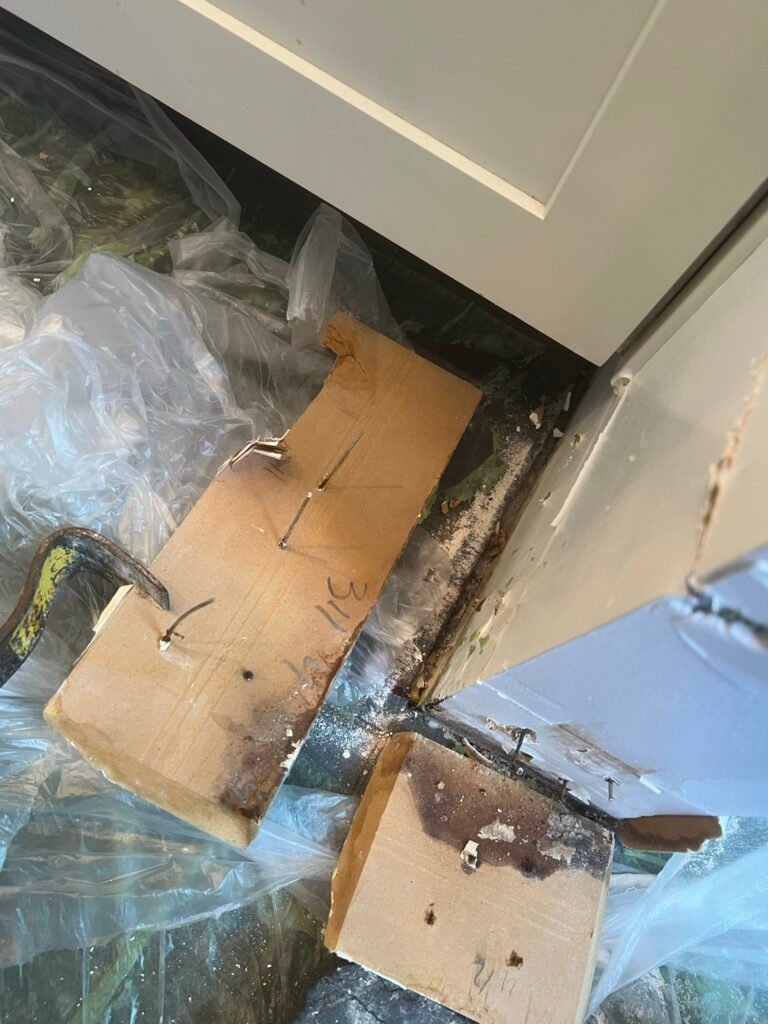
When the baseboard is the source of a lingering smell, the instinct is to repaint it. Fresh primer, fresh paint, sometimes a stronger odor-blocking primer. But baseboards are absorbent on every surface — front, back, top, and bottom. The contamination usually lives on the back side (against the wall) or the bottom edge (against the subfloor) — exactly the surfaces a paint job can’t reach without removing the trim first.
The new paint looks great for a few weeks. Then the smell finds its way back through the seams, around the edges, through the caulk lines. The contamination is still there — just hidden by a layer of fresh finish.
The new paint looks great for a few weeks. Then the smell finds its way back through the seams, around the edges, through the caulk lines. The contamination is still there — just hidden by a layer of fresh finish.
The new paint looks great for a few weeks. Then the smell finds its way back through the seams, around the edges, through the caulk lines. The contamination is still there — just hidden by a layer of fresh finish.
Painting the front of contaminated trim doesn't address the contamination. It just covers it up — until the smell comes through the seams.
In some cases, sealing the front of the baseboard with the right product can be enough — when contamination is light and on the front face only. The inspection determines this. We’ll tell you when it’s enough, and when the trim needs to come off.
The Transition Zone
Why Baseboards Hold Pet Odor When Other Materials Don't
Here's why this layer is so often the missing piece:
It's not the floor. It's not the wall. It's the inch where they meet — and it absorbs from both directions.
Baseboards aren’t decorative trim — they’re functional, absorbent material sitting in the wettest zone of the room. Pet urine reaches them three different ways: from the carpet edge wicking sideways, from the wall above wicking downward (cat spray), and from the saturated subfloor below wicking upward. Once a baseboard absorbs urine on its back side, no amount of front-side cleaning or painting reaches the contamination.
The baseboard sits in the transition zone — and the transition zone is where contamination concentrates.
What Baseboards Are Actually Made Of
MDF (medium-density fiberboard)
the most common modern baseboard material. Compressed wood fibers held together with binder. Highly absorbent. Once wet, swells and stays swollen — and holds odor permanently.
Pine or fir
older homes and higher-end finishes. Solid wood baseboards absorb urine through the grain. Slightly less absorbent than MDF, but still hold contamination indefinitely once it's in.
Painted finish only on the front
the manufacturer paints the visible faces. The back, bottom, and cut ends are usually raw wood or raw MDF — exposed to absorption from any direction.
The unfinished side is where the contamination enters.
Three Wicking Directions
Urine reaches the baseboard from three different paths in the same room — and they all converge on the same trim:
1. Sideways from carpet:
urine in the carpet edge wicks horizontally into the bottom inch of the baseboard. Tack strip nail holes act as direct conduits.
2. Downward from wall:
cat spray on drywall runs down the wall behind the baseboard, gets trapped in the gap between baseboard and drywall, and absorbs into both surfaces.
3. Upward from subfloor:
a saturated subfloor releases moisture upward, wicking into the bottom edge of the baseboard. Most extreme in homes with concrete slab floors.
All three happen simultaneously in active pet households. The baseboard ends up contaminated from every angle.
If the carpet's been replaced and the wall's been painted but the smell still concentrates along the perimeter, the baseboard is almost always the layer holding the residual contamination. It's the most absorbent material in the transition zone — and the most overlooked one in cleanup work.
Audience Match
Real Baseboard Contamination Scenarios We Handle
Start here — find your situation: Every scenario below is a project we’ve handled. The first four are our most common calls.
- ★ Most Common Call
"Replaced the carpet but the smell came back through the perimeter"
Common scenario. Homeowner addressed the obvious layer (carpet, pad, sometimes subfloor) but kept the original baseboards. Within weeks of new carpet installation, the smell concentrates along the floor-wall junction — coming from the contaminated baseboards that were always there.
- ★ Most Common Call
"Painted the walls and trim but the smell didn't go away"
Painters can address the visible front of the baseboard. They can’t address the back, the bottom, or the cut ends — which is where the contamination sits. New paint covers the surface; the trapped urine continues releasing odor through the seams. Treatment or replacement is the actual fix.
- ★ Most Common Call
"Cat sprayed walls and door jambs — the trim is saturated"
Cat spray runs down the wall and pools at the floor-wall junction where it absorbs into the baseboard from the top. Door jambs absorb spray directly. Both baseboards and door trim usually need to come off — front-side treatment alone isn’t sufficient for spray contamination.
- ★ Most Common Call
"Pre-listing — flooring is done but the smell is still in the perimeter"
Sellers preparing a property for market who already invested in new flooring or paint, but the baseboards were skipped. Buyers walking the property crouch to look at trim, and they can smell what the flooring couldn’t seal. Baseboard treatment or replacement before listing keeps the sale price intact.
If the smell is loudest along the floor-wall junction, the baseboards are almost certainly the missing layer. Call now and get the scope.
"Tenant move-out — baseboards damaged from years of pet contamination"
Property managers and landlords during turnover. Carpet replacement is standard scope; baseboard remediation is often where the actual smell removal happens. Documentation produced for deposit recovery. See our tenant move-out pillar.
"Concrete slab home — moisture wicking up into the baseboards"
Slab-on-grade homes face an extra wicking direction: contaminated concrete below the baseboard releases moisture upward into the trim. Treatment requires both concrete sealing and baseboard work — addressing one without the other isn’t sufficient.
Whichever scenario matches yours — the baseboard is the layer that's still holding the contamination.
Smell Along the Perimeter? Start the Phone Quote.
Where It Concentrates
Where Baseboard Contamination Tends to Be Worst
Cat urine doesn’t spread evenly. It concentrates in patterns. This is where we find it.
Bottom Inch (Floor-Line Wicking)
The lowest section of the baseboard absorbs from carpet edges, tack strip nail holes, and the saturated subfloor below. Bottom-inch contamination is the most common pattern — visible as paint failure, swelling, or visible staining along the lowest band of the trim.
Back Side (Wall Contact Surface)
The back of the baseboard is unfinished MDF or raw wood pressed against the drywall. Cat spray running down the wall gets trapped in the gap between baseboard and drywall, absorbing into both. Once contamination is on the back side, no front-side treatment can reach it.
Cut Ends and Miter Joints
Where two baseboards meet at corners, the cut ends are unfinished raw material — the most absorbent surface in the entire baseboard. Outside corners and inside corners both concentrate contamination at the joint. Caulk failure follows.
Around Door Jambs and Trim Transitions
Door jambs, casing trim, and the points where baseboards meet door frames create concentrated zones. Pet spray, traffic patterns, and water from cleaning all accumulate at these vertical/horizontal transitions. Door jambs frequently need replacement when baseboards do.
Behind Caulk Lines (Sealed Contamination)
Caulk seals the gap between the top of the baseboard and the drywall. Older caulk lines that have failed allow contamination to wick into the wall cavity above. Newer caulk over contaminated trim seals the urine in — without addressing it.
Concrete-Slab Adjacent Walls
In slab-on-grade homes, the bottom of the baseboard sits directly above contaminated concrete. Moisture wicks upward indefinitely as long as the slab below holds urine. Treating the baseboard without also treating the concrete means recontamination in months.
This is where partial work fails — and complete-zone work succeeds.
We treat the entire transition zone — not just the front face of the trim.
The Cost of Skipping This Layer
What Happens If You Treat Everything Else but Leave the Baseboards
Most pet odor remediation projects address the floor and the wall — and overlook the inch of trim where they meet. The result: thousands of dollars spent on carpet, paint, and drywall work, with the smell still concentrated along the perimeter because the baseboards were never treated.
The trim is small. The contamination it holds isn't. Skipping this layer turns major remediation work into partial remediation work.
The Smell Returns to the Same Perimeter
You spent the money on new carpet and paint, but the smell concentrates exactly where the baseboards meet the floor. Every visitor notices. Every showing during a sale gets walked through with a “what’s that smell?” moment. The new finishes don’t fix what the trim is still holding.
You Paid for Major Work — Without Solving the Problem
Carpet replacement, whole-house painting, drywall work — when the baseboards stay contaminated, all of that becomes partial remediation. The actual fix was a small fraction of the total budget — but you didn’t know to ask for it. The major spend addressed the wrong layers.
Resale Value Drops Despite the Work
Buyers can smell what you can no longer notice (smell fatigue is real). A home that looks fresh but smells like pet residue along the perimeter doesn’t show as “renovated” — it shows as “covered up.” That suspicion costs more on the sale price than the baseboard work would have cost.
Fresh Flooring Gets Recontaminated
New carpet edges absorb odor from contaminated baseboards almost immediately. New LVP and tile aren’t immune either — the perimeter junction wicks contamination horizontally into the new flooring’s edge zones. The new floor starts holding the smell within months.
Disclosure Liability for Sellers
Buyers can smell what you can no longer notice (smell fatigue is real). A home that looks fresh but smells like pet residue along the perimeter doesn’t show as “renovated” — it shows as “covered up.” That suspicion costs more on the sale price than the baseboard work would have cost.
The Same Cycle Repeats With New Pets
Other pets (yours, visitors’, or the next family’s) detect residual urine markers in the baseboard — even when humans can’t smell it strongly. The contaminated trim attracts continued marking, restarting the cycle on top of the unfinished previous work.
The baseboards are the smallest material in the room. They're also the most absorbent and the most overlooked. Skipping this layer is the most common reason whole-home remediation projects don't deliver the result the homeowner expected.
If this is what you're dealing with, call now and get the exact scope and cost.
When carpet replacement is part of the project, see also our carpet removal service. The exposure window is the right time to address baseboards too — while everything is open.
The Process
How We Treat or Replace Contaminated Baseboards
Here's how the transition zone gets addressed — without painting over the problem:
Treatment when treatment is enough. Replacement when it isn't.
Pet Odor Inspection
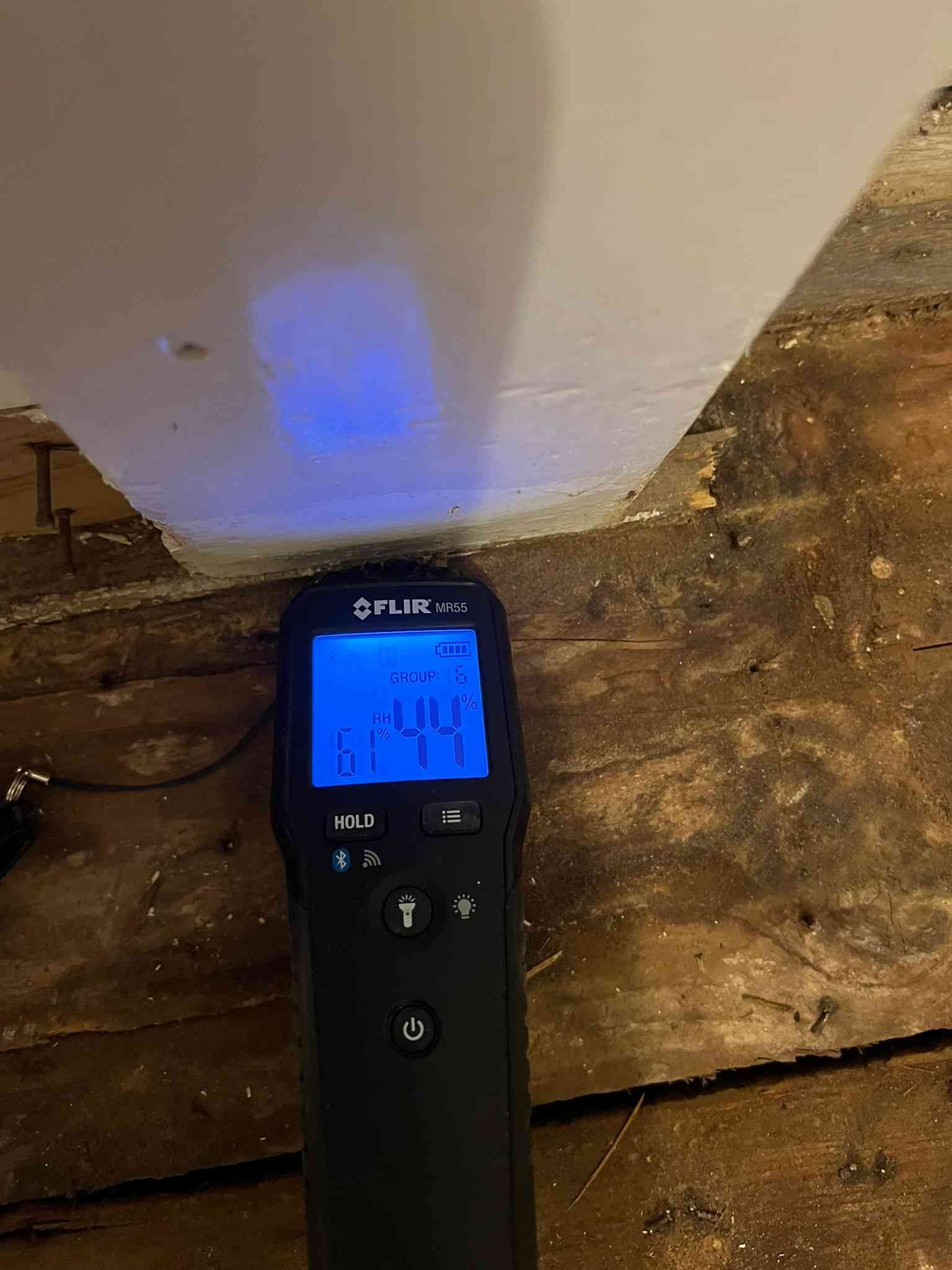
Every project starts with our Pet Odor Inspection. UV black light reveals contamination zones along the perimeter. Moisture meters confirm depth in the trim and adjacent drywall. Output: itemized estimate showing which baseboards can be treated in place and which need replacement.
Baseboard Removal Where Needed
Heavily contaminated baseboards come off — front face, back side, and cut ends are all exposed for the first time. The drywall behind is now accessible for treatment. The subfloor edge underneath is now accessible. The actual scope is now visible, not assumed.
Transition-Zone Treatment
Exposed drywall back-side, lower wall framing, subfloor edge, and (if baseboards stay) front-face trim receive our proprietary Odor Encapsulator. The product penetrates absorbent materials, bonds at the molecular level, and seals trace contamination inside the substrate.
Reinstallation Coordination
New baseboards (or treated existing trim) are reinstalled with proper caulking. We coordinate with finish carpenters and painters when it makes sense to do so — many projects involve handing the cosmetic finish work back to the contractor who started it.
Verification & Sign-Off
Before we close the job, we verify the perimeter odor is gone. Documented in the post-completion report. 5-year guarantee starts the day we sign off — covering the structural treatment of the transition zone.
At the end of this process, the layer most cleanup work overlooked is finally addressed.
Our structural baseboard remediation is backed by a 5-year written guarantee.
Get the Perimeter Layer Addressed.
Related Services
What Often Connects to Baseboard Work
Baseboard contamination rarely sits in isolation — the trim is the meeting point of three other surfaces, and contamination usually exists in at least one of them too:
The bottom 4-12 inches of drywall behind the baseboard is the most common adjacent contamination zone. While the trim is off, treating the drywall is efficient and cost-effective.
The subfloor edge below the baseboard is often the upward wicking source. Sealing the subfloor prevents recontamination of any new baseboards installed on top of it.
For slab-on-grade homes where contaminated concrete sits below the baseboard. Without sealing the concrete, the trim above will recontaminate within months of treatment.
Required first step. Documents the actual scope across baseboard, drywall, and subfloor — and produces the itemized estimate before any work begins.
When carpet replacement is part of the project, see also our carpet removal service. The exposure window is the right time to address baseboards too — while everything is open.
FAQ
Frequently Asked Questions
Cost depends on linear feet of contaminated trim, whether treatment in place is sufficient or full replacement is needed, and what adjacent drywall or subfloor work is included. Single-room baseboard work and whole-home perimeter scope are very different. Every project starts with our inspection, which produces an itemized estimate. Free phone quote — call 877-386-3677.
It depends on contamination depth and which surfaces are affected. Light front-face contamination on solid wood baseboards can sometimes be treated in place. Heavy contamination, MDF baseboards, back-side absorption, or contamination from cat spray usually requires removal so the back side and the drywall behind can be addressed. The inspection determines which approach fits your situation.
Paint addresses the front face. Pet urine usually contaminates the back side (against the wall), the bottom edge (against the subfloor), and the cut ends (corners and joints) — surfaces a paint job can’t reach without removing the trim. The contamination stays trapped, and the odor finds its way out through the seams, top caulk line, and joint corners over time.
When the trim is high-end (thick solid wood, custom millwork, historic), we work hard to treat in place rather than replace. We can remove the trim carefully without damage, treat the back side and surrounding structure, and reinstall the original. When MDF baseboards are saturated, replacement is usually faster, cleaner, and more cost-effective than treatment.
Room-by-room scope is fine when contamination is localized. Whole-home scope makes sense when smell is consistent throughout. The inspection identifies which rooms have baseboard contamination and which don’t — many projects address only the affected rooms. We don’t upsell scope that isn’t needed.
Our structural baseboard remediation is backed by a 5-year written guarantee. Every area treated with our Odor Encapsulator is covered. If odor returns in a treated area within 5 years, we retreat at no charge. The transition zone gets fully addressed — and the perimeter smell stops returning.
Every dollar spent on carpet, paint, and drywall remediation that skipped the baseboards is partial work — and the smell along the perimeter proves it.
One number. Itemized. From the team that addresses the layer most contractors skip.
Where to Next
Still Reading? Here's the Fastest Path Forward.
- Not Sure Yet?
Not sure where the odor is coming from? Start with a Pet Odor Inspection. The inspection finds the actual scope before any work begins — UV black light, moisture meters, pattern recognition, itemized estimate.
- Other Surfaces
- If the odor is strongest near walls or baseboards, see Drywall Odor Removal.
- If the smell is coming from below the flooring, see Subfloor Odor Sealing.
- If the smell is coming from a slab, garage, patio, or basement concrete, see Concrete Odor Sealing.
- If the carpet itself is contaminated and needs to come out, see Carpet Removal.
Stop Painting Over It. Address the Inch That Holds the Smell.
You don't have to figure this out yourself. We handle this every day.
You don’t need to know yet whether the baseboards can be saved or need to be replaced — that’s what the call sorts out.
Get a real number from the team that treats the transition zone — front face, back side, drywall behind, subfloor below. Free phone quote. Honest scope.
The inspection scopes the project before any work begins.
If new paint and new flooring aren't getting the job done, you don't have a finishes problem — you have urine odor embedded in the baseboards, the subfloor edge, and the drywall behind them.
Call now and address the layer your other contractors skipped.
Quick call. No pressure. We’ll tell you what’s worth doing first.
If you can smell it, we can find it. If we can find it, we can eliminate it at the source.
