Stop Masking-Call the OdorXpert™
Talk to an Odor Expert Now
(877) 386-3677
Surface treatments only reach what's accessible. Our process targets the pet-urine odor embedded in the subfloor below the surface — before your new flooring goes down.
30+ Years of Field Experience
We Start Where Carpet Cleaners Stop
Odor Proofing Guarantee — 5 Years, Written
Odor Proofing — sealing qualifying treated structural surfaces with our Odor Encapsulator (our odor proofing sealer), backed by a written 5-year guarantee.
Odor proofing complements remediation — it never replaces it. Contaminated material is treated, dried, and replaced where needed before anything is sealed.
If the subfloor is contaminated, the smell comes right back through your new floor. Installing new carpet, hardwood, or LVP over it traps the odor — if you smell anything now, it will be worse after installation.
New flooring does not remove odor — it hides it temporarily. Fixing it later means tearing everything out again.
Urine in the subfloor doesn't dry out and disappear. It sits inside the wood and continuously releases vapor into the room above. Heat increases the rate of release. Humidity increases it. Closed windows trap the vapor inside.
Surface cleaning — even a deep professional shampoo — only treats what's on top. The urine embedded in the subfloor below remains untouched, releasing odor days, weeks, or months after the last cleaning.
If the smell keeps coming back, the source was never removed. — OdorXpert field team
01 · Carpet fibers — penetrated in seconds
02 · Carpet pad — acts like a sponge
03 · Tack strip & seams — wicks into the wood
04 · Subfloor — where the odor lives
The subfloor catches everything that gets past the carpet — and once saturated, the wood holds the urine and releases the smell for years.
By the time you smell it, the urine is already below the surface. Each of these products has its time and place — a urine-saturated subfloor isn't one of them.
WRONG JOB
Built for fresh accidents on washable surfaces. On an old subfloor they add moisture and drive it deeper.
NOT FOR SUBFLOOR
Material-specific — vinegar for fabrics, bleach for hard surfaces. Neither reaches urine in wood.
LIGHT ODOR ONLY
Seals only light odor on fully dried wood. Heavy contamination bleeds right back through.
TREATS AIR, NOT WOOD
Knocks down airborne odor; doesn't remove urine bonded inside the material.
ADDS WATER
Surface cleaning that soaks the wood. Indoors, it just pushes moisture deeper into the structure.
The drier the wood, the less odor it holds. We dry the structure before we seal — the opposite of pouring more liquid on it.
Where you live changes how odor moves through the structure, and how we treat it.
Humid air rehydrates dried urine salts in the subfloor, so odor surges on damp days and after rain. Drying is the critical step.
High heat drives off moisture and concentrates residue in the wood, which then off-gasses into warm rooms. Sealing contains it in place.
When urine damage is on the subfloor, the subfloor is almost never the only contaminated surface — it wicks into baseboards, drywall, door jambs, and in severe cases the sill plate and studs.
MDF and finger-jointed pine absorb liquid like a sponge; swollen baseboards signal contaminated drywall behind them.
Urine wicks up the paper face behind baseboards and into the wall cavity.
A common cat-spray target — urine runs down the jamb into its base and the subfloor below.
Where urine has pooled a long time it can reach the sill plate and studs — assessed during inspection.
This is why we insist on a full Pet Odor Inspection before remediation begins. We map every contaminated surface so the scope covers everything — one documented scope, one coordinated job.
No cleaning steps. No surface patches. Your inspection determines which phases your job actually needs.
1
UV black light, moisture meters, and field experience map the contamination and its extent — with an itemized estimate before any work begins.
2
We locate affected zones room by room, including hidden contamination a visual inspection misses.
3
We test moisture and dry with professional equipment before any sealing begins.
4
Where surface contamination is heavy, sanding exposes cleaner wood; severely damaged material may be replaced.
5
We apply the Odor Encapsulator — our odor proofing sealer — to qualifying treated subfloor and adjacent structural surfaces.
Penetrates into the wood material
Bonds to and seals the treated surface
Creates a barrier that contains remaining contamination
Helps keep odor from rising into the room above
5-YEAR WRITTEN GUARANTEE
Qualifying structural surfaces treated with our Odor Encapsulator are backed by a written 5-year guarantee. The Odor Encapsulator is designed to help contain and reduce embedded urine vapors in the materials it is applied to. The covered surfaces are listed in your documented scope and identified by your invoice number.
If a qualifying treated surface does not perform as designed within the guarantee period, OdorXpert will re-treat that surface at no additional labor or encapsulation-material cost — excluding third-party flooring removal or reinstallation, structural access, and travel outside the standard service zone. Coverage begins on the date treatment is completed, as documented on your final invoice, and transfers to a new property owner within the 5-year period with that invoice. The guarantee applies only to qualifying surfaces treated with our Odor Encapsulator — not to inspections, estimates, oxidizer-only work, or smoke odor.
The guarantee is voided by new or renewed pet-urine contamination, water leaks or flooding, structural modification of the treated area, or any third-party sealer, paint, or coating applied over the Odor Encapsulator. What odor proofing does and does not do: it addresses pet-urine odor in the specific structural materials we treat. It does not make floors, walls, or the property impervious to future pet accidents or to odor from other sources.
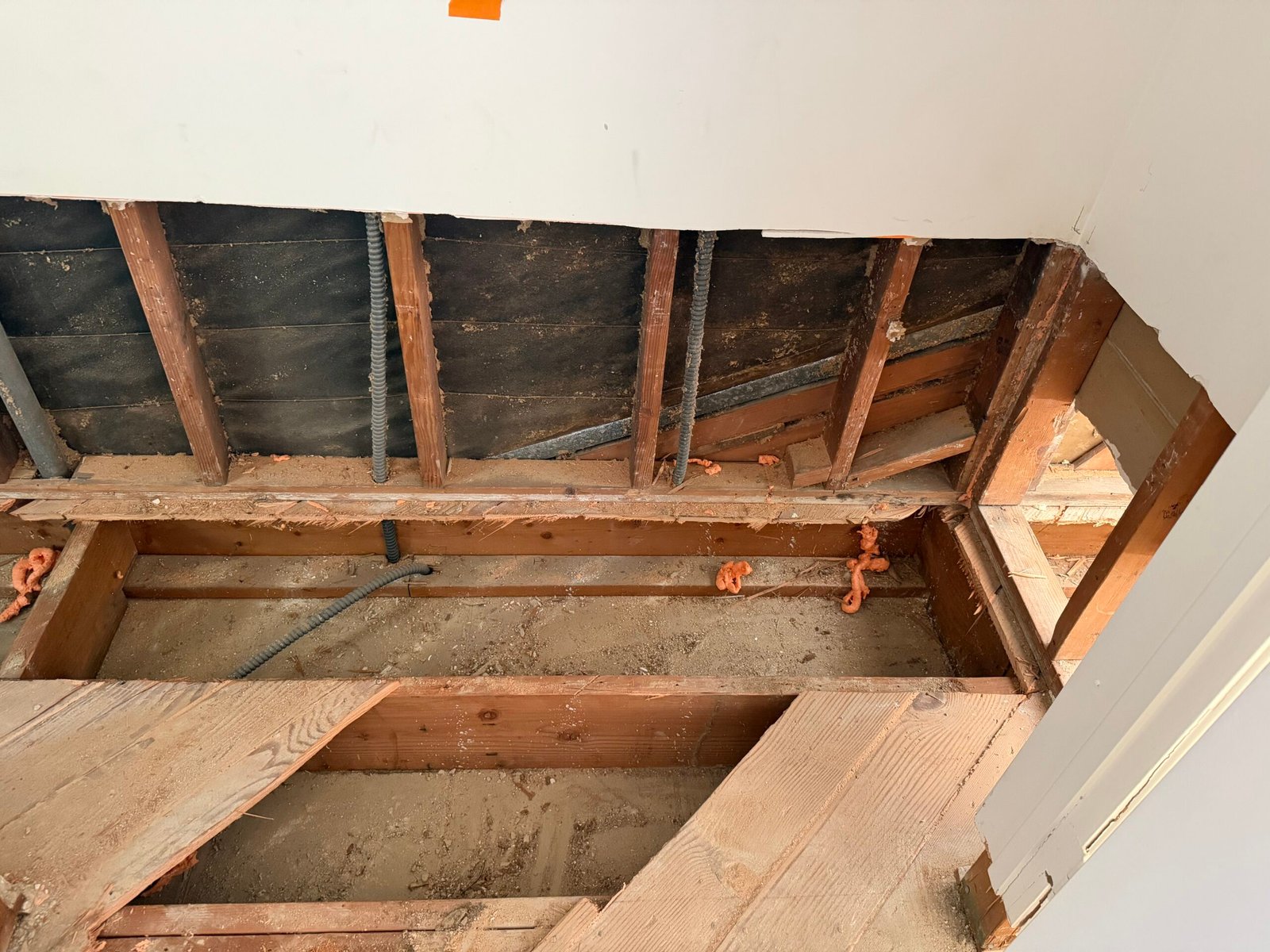
Read Guarantee Terms →On this subfloor odor proofing job, the cat urine didn't stop at the subfloor — it had traveled into the joists and through to the ceiling of the room below. The source sits deep in the structure, not on the surface.
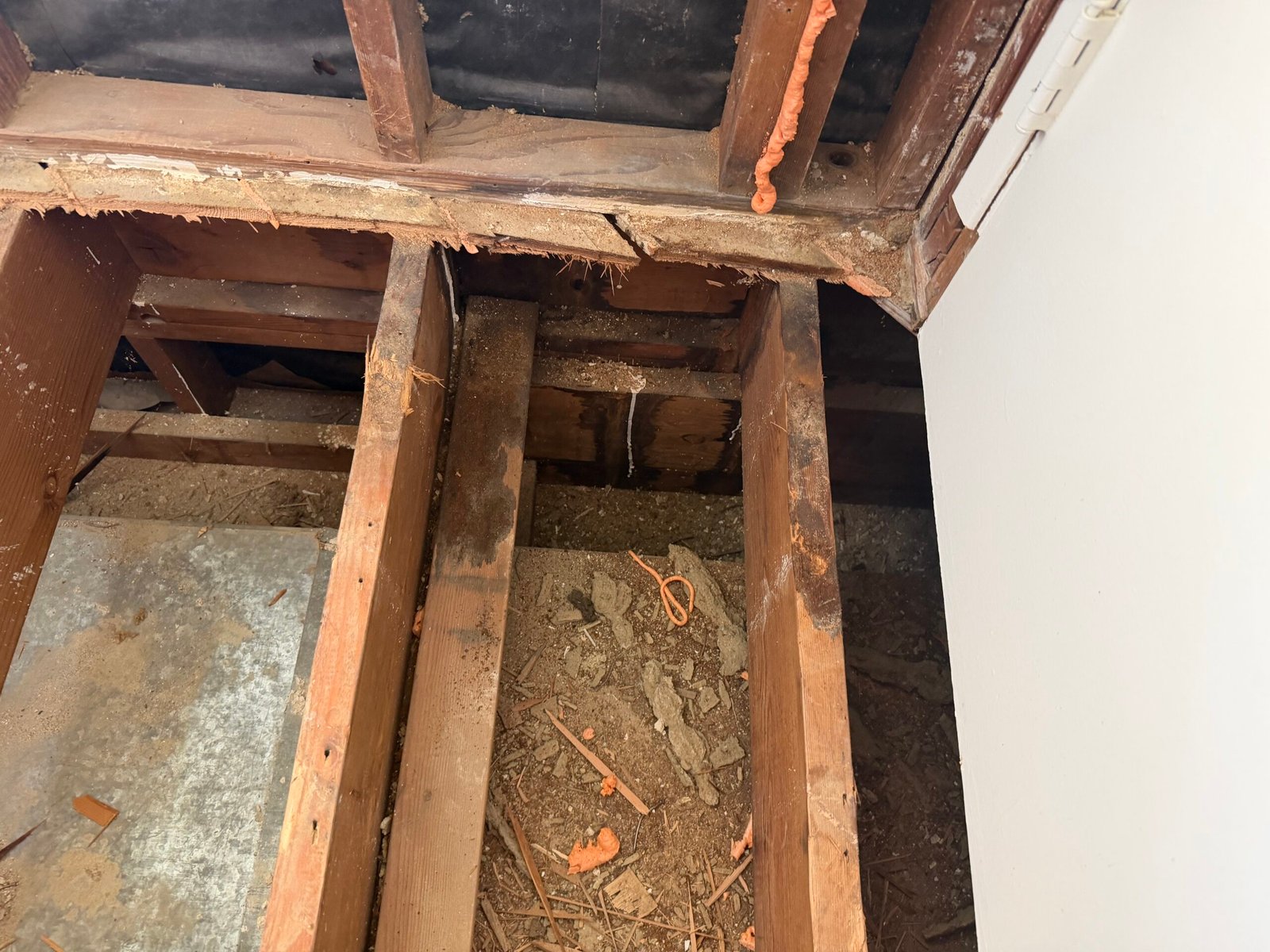
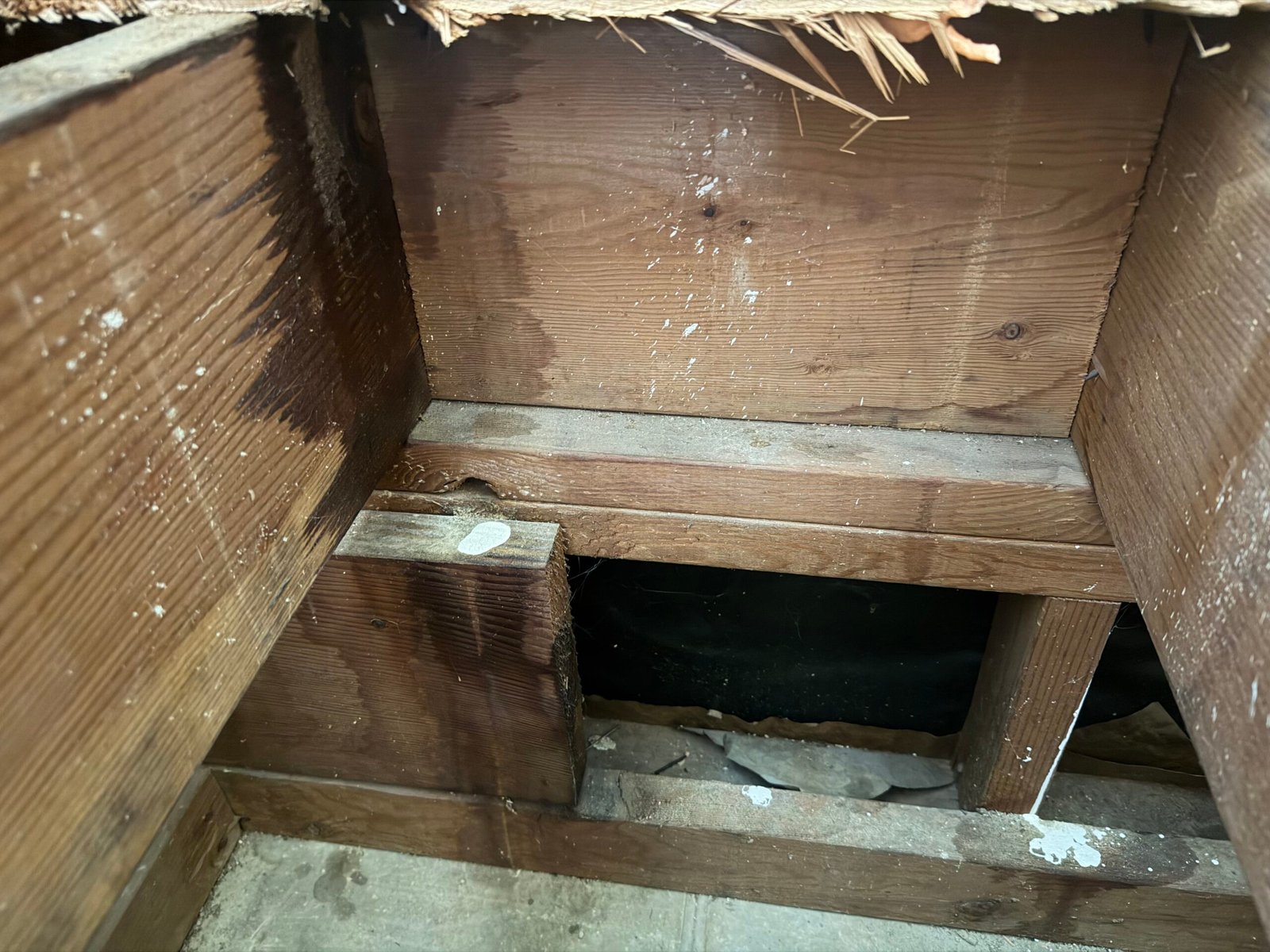
Contaminated subfloor and framing, exposed and sealed with the Odor Encapsulator.
Verbatim reviews from OdorXpert's Google Business Profile.
★★★★★
22 Google reviews
★★★★★
Jody and his team came to clean up a surprisingly difficult cat urine/spraying issue left behind by a former tenant. We had tried everything: multiple cleanings, odor killers, etc. Nothing worked. It wasn't until OdorXpert came by that we understood the extent of the damage: they pulled the mop boards, some of the sheetrock and flooring, as well as several doors, then repaired, replaced and sealed the areas that the smell was abated. Thanks, guys! What a difference you made.
Joel Martens · Google review
★★★★★
Jody was incredibly knowledgeable and prompt. Great communication. Hard working crew. Fixed my problem completely which ended up needing sub floor to get partially jackhammered out and leveled again with concrete as well as drywall replaced in some of the corners. I thought his pricing was incredibly fair. So happy we found him in time for our new flooring to go in. Highly recommend.
Kristin Walla · Google review
★★★★★
Jody is the loveliest. We had a persistent cat odor problem in our guest room that we had tried to solve by having the carpet cleaned multiple times. Jody came out the next day and did a very careful inspection of the room. He concluded that the sour smell was likely the carpet cleaning solution which had not dried properly, rather than cat urine. He drove from a job in Long Beach all the way to Woodland Hills to do this inspection at the end of a long day. In the end, there was no work for him to do, but he could not have been nicer about coming so far. If you have an odor problem I would highly recommend Jody. He is clearly very knowledgeable and a very kind person.
Monica Case · Google review
★★★★★
My new home had the worst cat urine smell in garage and guest bedroom which we thought was impossible to get rid of. But Jody and his team performed a miracle that we thought was impossible! So happy I used their service!
Kwan Suh · Google review · Local Guide
★★★★★
Jody was in town when I called and quickly came by and inspected the damaged carpet situation. He was very professional and well prepared to review the damage. I really appreciate the inspection and would recommend him to others in need of urine damaged floors.
Andrew Ramos · Google review · Local Guide
★★★★★
Amazing job! Great service at a great price! They went over and above! They threw out bed/box spring and a recliner from the room for free, I will absolutely be a repeat customer! Thanks so much guys! 🙂
V. · Google review
Odor proofing is sealing qualifying treated structural surfaces — subfloor, concrete, and adjacent framing — with our Odor Encapsulator so embedded pet-urine odor is contained rather than off-gassing up through your floor. Qualifying treated surfaces are backed by a written 5-year guarantee.
Yes — once the subfloor is treated and sealed, new flooring goes down over a clean, sealed base. The point is to seal first so odor can't come back up through the new floor.
It depends on the affected area and how deep the contamination goes. You get a timeline with your itemized estimate after the inspection.
Most of the improvement is apparent once the treated area is dried and sealed. Your inspection sets expectations for your specific job.
Cost depends on severity, area, and materials. After the inspection you get a documented, itemized estimate — no guessing and no surprise charges.
That usually means the subfloor was never treated. We inspect to confirm the source and scope before recommending anything.
The inspection is what tells us which surfaces are actually contaminated and how deep — so the plan addresses the real scope, not just what's visible.
A written guarantee on qualifying surfaces treated with our Odor Encapsulator, identified by your invoice number. It does not cover inspections, estimates, oxidizer-only work, or smoke odor.
Treat or replace urine-wicked drywall, baseboards, and wall cavities.
Learn more →Contaminated carpet and pad pulled and disposed of before sealing begins.
Learn more →Odor-proof the subfloor before new flooring goes down, not after.
Learn more →Whole-home remediation when contamination reaches framing and sill plates.
Learn more →ODOR PROOFING SERVICE · 5-YEAR WRITTEN GUARANTEE
You don't have to figure this out yourself. We handle this every day.
Serving all of California
