Concrete Odor Sealing (When Cat Urine Smell in Concrete Won't Go Away)
You’ve pressure washed the garage. Multiple times. You’ve poured enzyme cleaner on the concrete, let it soak, scrubbed it in, and rinsed. The surface looks clean. It is clean. But the smell keeps coming back.
Maybe you’ve tried vinegar, bleach, or some specialized concrete cleaner. The smell goes away for a day or two… then comes roaring back. Especially when it’s hot, or when you close the garage door.
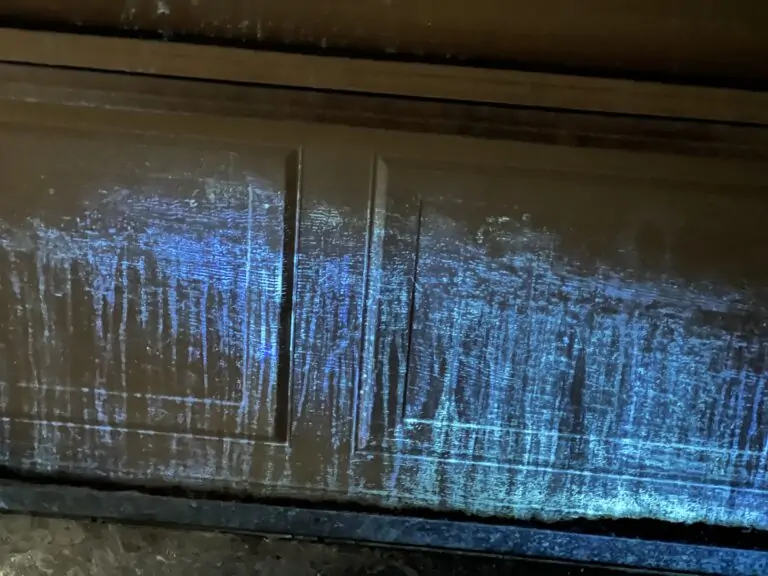
Here’s what’s happening: The problem isn’t that the surface is dirty. The problem is that cat urine has been soaking into the pores of the concrete for months or years. You’re cleaning the surface beautifully. But the odor is embedded deep in the slab and surface cleaning can’t reach it.
If you’re reading this, you’re not looking for another product to try. You’re looking for someone who understands why concrete holds urine odor and how to fix it permanently.
.
Concrete Odor Sealing (When Cat Urine Smell in Concrete Won't Go Away)
You’ve pressure washed the garage. Multiple times. You’ve poured enzyme cleaner on the concrete, let it soak, scrubbed it in, and rinsed. The surface looks clean. It is clean. But the smell keeps coming back.
Maybe you’ve tried vinegar, bleach, or some specialized concrete cleaner. The smell goes away for a day or two… then comes roaring back. Especially when it’s hot, or when you close the garage door.
Here’s what’s happening: The problem isn’t that the surface is dirty. The problem is that cat urine has been soaking into the pores of the concrete for months or years. You’re cleaning the surface beautifully. But the odor is embedded deep in the slab—and surface cleaning can’t reach it.
If you’re reading this, you’re not looking for another product to try. You’re looking for someone who understands why concrete holds urine odor—and how to fix it permanently.
Why Cat Urine in Concrete Is Different (And Why Washing Doesn't Work)
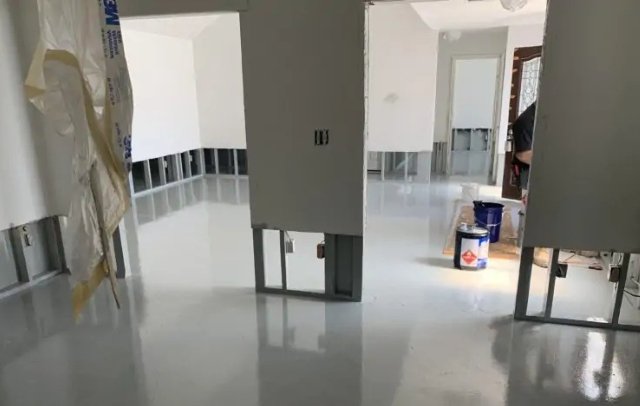
Here’s the thing about concrete: it’s not a solid surface. It’s a porous sponge.
Concrete looks solid, but it’s full of microscopic pores, capillaries, and air pockets. When cat urine hits concrete, it doesn’t just sit on top. It soaks in—deep into the slab, through the pores, into cracks, joints, and seams. Think of it like spilling water on a kitchen sponge. The liquid doesn’t stay on the surface. It gets absorbed into the structure.
This is the key difference: Pressure washing, enzyme cleaners, and other products do an excellent job cleaning the surface. The slab looks clean because it IS clean on top. But the contamination that’s been absorbing into the pores for months or years? That’s still in there, embedded in the concrete structure. And as long as it’s in there, it’ll keep off-gassing odor especially when the slab heats up or gets damp.
This is why people call us after they’ve already:
- Pressure washed the garage slab 3-4 times (sometimes more)
- Dumped gallons of enzyme cleaner and let it “dwell” for hours
- Tried acid etching, TSP, vinegar, bleach, or hydrogen peroxide
- Sealed the concrete with a “waterproof sealer” they bought at Home Depot… only to have the smell come back worse
- Lived with the problem for months (or years) because nothing works
None of those things are “wrong” exactly. They’re just not designed for urine that’s embedded in concrete. And that’s the real problem.
The Most Common Searches We See (And
What They Really Mean)
Cat urine smell in garage concrete won't go away
I’ve washed this slab over and over. The smell keeps coming back, especially when it’s hot.
How to remove cat pee smell from concrete
I’ve tried enzymes, pressure washing, and everything the internet says. Nothing works.
Concrete still smells like cat urine after sealing
I sealed the garage floor thinking that would solve it. Now the smell is trapped and it’s worse.
Cat urine smell in basement concrete floor
The basement smells like ammonia. I think it’s in the slab but I’m not sure.
Professional concrete odor removal service
I’m done with DIY. I need someone who actually knows how to fix this.
Bought a house and garage smells like cat pee
The seller didn’t disclose this. Now I own a house with a garage I can’t use.
Areas We Serve
We proudly serve all of California, including:
We also serve Arizona, Nevada, and other nearby states by special request.
Get rid of pet urine odor the right way! OdorXpert ™ Pet Odor Removal Service
OdorXpert ™ removes stubborn pet urine odors using advanced tools and proven methods, ensuring your home is clean, fresh, and ready to live in or sell. Contact us today.
Trustindex verifies that the original source of the review is Google. Jody came over to give his expert investigation and assessment of the situation. I appreciated his timely response and expertise in this area.Posted onTrustindex verifies that the original source of the review is Google. Jody and his team were amazing! They went above and beyond to eliminate years of cigar smoke damage in our clients loft- highly recommend!Posted onTrustindex verifies that the original source of the review is Google. In freaking credible! Great crew. Expertise in every problem. Living room has never looked better. SMELL ANNIHILATED!Posted onTrustindex verifies that the original source of the review is Google. PORS is hands down the best pet odor remediation service. We had tried various clean up and remediation services and to no avail nothing worked. The issue needed a real pro. The PORS team was fast to coordinate a thorough inspection and they delivered on their promise of 100% remediation. 10/10 would recommend.Posted onTrustindex verifies that the original source of the review is Google. Recently was overwhelmed with the smell of pet urine all over my moms lovely home. I could not even bear to visit her any longer. We decided to address the issue ASAP and luckily found Jody and Pet Odor Removal Service on line. They were super responsive, a pleasure to work with and did a fantastic job moving everything out of the house addressing all problem areas, redoing the floors, then efficiently putting everything back in its place minus that god awful smell. In just a few days the home was fabulous with no smell thanks to Jody and team. I highly recommend them !Posted onTrustindex verifies that the original source of the review is Google. I recently used Pet Odor Removal Service to address a persistent cat urine issue in our newly purchased house, and I couldn't be more pleased with the results! From start to finish, the experience was exceptional. Jody, the owner, was incredibly professional and attentive. He took the time to explain the entire process and answered all my questions thoroughly. His expertise and dedication to customer satisfaction were evident from our first interaction. The team of employees was also fantastic. They arrived on time, were courteous, and worked efficiently. Their attention to detail was impressive, ensuring that every trace of cat urine odor was eliminated. They not only remediated the issue but also put everything back together as it was before. What truly stood out was their dedication. Despite the long drive, Jody and his team made multiple trips to ensure the issue was completely resolved. Their commitment to making things right was evident in every aspect of their service. Customer service was top-notch. Jody and his team went above and beyond to ensure I was satisfied with the service. They were friendly, approachable, and genuinely cared about delivering excellent results. I highly recommend Pet Odor Removal Service to anyone struggling with pet odors. Their professionalism, effectiveness, and outstanding customer service make them the best choice for odor removal needs. Thank you, Jody and team, for your excellent work!Posted onTrustindex verifies that the original source of the review is Google. I highly recommend. The workers are knowledgeable and professional.Posted onTrustindex verifies that the original source of the review is Google. We hired Jody and Pet Odor Removal Service (PORS) to address a house with terrible cat urine odor and feces damage throughout the house. PORS provided us a thorough inspection report beforehand which provided us with a clear understanding of the problem and a roadmap on how they would address it. In the end, they successfully rid the home of the odor and we could not be more pleased with the results. Additionally PORS was asked to clean out another hoarder home and completed that task in short order and as promised. We could not be more pleased with this very professional service and will recommend them at every opportunity.Posted onTrustindex verifies that the original source of the review is Google. Jody and his team transformed my garage. I give them a 20/10 and highly recommend them to anyone!
Where the Smell Actually Hides in Concrete (And Why You Keep Missing It)
Cat urine doesn’t contaminate concrete evenly. It concentrates in specific zonesand these zones are exactly where people skip when they’re trying to clean.
1. Perimeter Edges (Along the Walls)
This is the #1 problem area. Cats spray and urinate along walls. In a garage, they mark the perimeter where the slab meets the wall. The urine runs down the wall, hits the concrete edge, and soaks into the slab right at the wall line. This area is often the most contaminated part of the entire garage, but it’s hard to see and harder to clean effectively.
2. Door Corners and Thresholds
Cats mark doorways. It’s instinct. The corners where the garage door meets the slab, or where an interior door threshold sits, are prime marking zones. Urine collects in these corners and soaks into the concrete. Even if the center of the garage looks clean, the door corners can be saturated.
3. Control Joints and Expansion Cracks
Concrete slabs have joints and cracks by design. These joints are intentional breaks that allow the slab to expand and contract without breaking randomly. The problem? They act like highways for odor. Urine runs into cracks, settles in joints, and spreads through the slab along these pathways. Even a hairline crack can hold contamination and keep off-gassing odor for years.
4. Low Spots and Drain Areas
If your garage or basement has a floor drain or a low spot where water pools, that’s where urine accumulates. Cats are attracted to damp areas, and urine naturally flows to the lowest point. These spots often have the highest concentration of contamination.
5. Anywhere a Litter Box Used to Be
If there was ever a litter box on the concrete even years ago that spot is likely contaminated. Cats miss. They spray the wall behind the box. Urine gets on the concrete around the box. And over time, that contamination soaks deep into the slab.
Why Concrete Odor Gets Worse in Hot Weather (And What That Tells You)
If the smell gets worse on hot days, when the garage door is closed, or when the HVAC is running, that’s a huge clue.
Heat causes off-gassing. When concrete warms up, odor compounds trapped inside the slab are released more aggressively. That’s why people say: “I didn’t smell it during the winter, but now that it’s summer, the garage is unbearable.”
The odor isn’t new. It was always there. Heat just makes it off-gas faster and stronger.
Humidity makes it worse too. When the slab is damp (from rain, humidity, or washing), odor compounds become more active. That’s why people notice the smell spikes after mopping or pressure washing. The moisture wakes up the contamination.
This is why sealing works: once the concrete is properly sealed, the slab can’t off-gas into the air even when it heats up or gets damp. The odor is locked in the concrete, permanently.
The DIY Products and Methods People Try (And Why They Fail on Concrete)
Let’s be honest about what works, what doesn’t, and where people get into trouble.
Pressure Washing
What it does well: Pressure washing does an excellent job cleaning the surface of concrete. It removes dirt, grime, loose debris, surface residue, and visible staining. After a good pressure wash, the slab looks clean. And it is clean on the surface.
Where the real problem is: The issue isn’t that the surface is dirty. The issue is that cat urine has been soaking into the pores of the concrete for months or years. It’s absorbed deep into the slab below the surface, in the pores, cracks, and joints. Pressure washing cleans the top layer beautifully, but it can’t extract contamination that’s already embedded in the concrete structure.
Why it can smell worse afterward: Pressure washing adds water to the slab. As that water dries out over the next few days, it brings odor compounds to the surface and increases off-gassing. People say: “I pressure washed it and now it smells worse.” The smell isn’t new—the drying process is just releasing odor that was already trapped in the concrete.
Bottom line: Pressure washing is great for surface cleaning. But if the urine has been soaking into the concrete for months or years, you’re dealing with embedded contamination, not surface dirt.
Enzyme Cleaners
What they’re designed for: Enzyme cleaners are excellent products when used correctly on fresh contamination. They break down uric acid crystals (the part of urine that causes odor). On fresh accidents especially on surfaces where the urine hasn’t had time to soak in enzymes work really well.
Why they struggle with concrete: The problem isn’t the product. The problem is that by the time most people discover severe concrete odor, the urine has been soaking into the pores for months or years. It’s dried, crystallized, and embedded deep in the slab. Enzymes work at the surface, but they can’t reach contamination that’s already absorbed into the concrete structure.
The other challenge: People pour bottles of enzyme cleaner on the concrete, let it dwell, and scrub it in hoping it’ll pull the odor out. But concrete is porous. The enzyme cleaner gets absorbed into the slab along with everything else. You might get temporary improvement while the concrete is wet and saturated with product, but once it dries out, the embedded odor comes back.
Bottom line: Enzyme cleaners are great products for fresh urine on surfaces. But months or years of embedded contamination in concrete is a different problem one that requires sealing the concrete so it can’t off-gas anymore.
Vinegar
What it’s good for: Fresh urine on fabrics, tile, linoleum, or sealed surfaces.
Where it fails on concrete: Vinegar is acidic, and acid can etch concrete. That makes the surface more porous, which allows odor to penetrate deeper. Even if vinegar neutralizes some surface smell, it doesn’t remove contamination that’s already in the slab. And you’re adding more liquid to a porous material—which can make the problem worse.
Never use vinegar on concrete for urine odor.
Bleach
What it’s good for: Sanitizing hard, non-porous surfaces. Killing bacteria and mold on concrete in controlled, well-ventilated areas.
Where it fails: Bleach doesn’t penetrate deep into concrete. It lightens surface stains, kills surface bacteria, and creates harsh fumes but it doesn’t remove odor that’s embedded in the pores. And mixing bleach with other cleaning products (especially ammonia or acids) creates toxic gas. Never mix bleach with anything.
Sealing with a Regular Garage Floor Sealer
This is the mistake that makes people the most frustrated.
Someone reads online that sealing concrete will “lock in the odor.” So they buy an epoxy coating or a waterproof sealer from Home Depot, roll it on the garage floor, and wait for the smell to go away.
What actually happens:
- If the concrete is still damp from washing, the sealer doesn’t bond properly
- If the slab wasn’t prepped correctly, the sealer peels or bubbles
- Regular sealers are NOT designed to block odor—they’re designed to protect concrete from moisture and stains
- The odor continues to off-gas through the sealer, or it gets trapped under the coating and makes the smell worse
Bottom line: You need an odor encapsulation system, not a waterproof sealer. They’re not the same thing.
Ozone Generators, Hydroxyl Machines, Chlorine Dioxide
We get calls from people who’ve rented or bought ozone machines and run them in the garage for days. The air smells better while the machine is running. Then the odor comes back.
Here’s why: Those machines treat odor in the air. They don’t treat odor embedded in concrete.
Ozone can neutralize odor molecules floating around in the room, but it can’t penetrate deep into a concrete slab. The source is still there, and as soon as the garage heats up or the slab gets damp, the odor starts off-gassing again.
Air treatments are not source treatments. If the problem is in the concrete, you have to deal with the concrete.
Climate Matters (What Works in San Diego Won't Work in Bakersfield)
Location affects how concrete odor behaves.
A garage slab in coastal San Diego stays cooler and more humid. Odor off-gasses slowly and steadily. The same slab in Bakersfield where it’s hot and dry might dry out faster, but extreme heat causes faster and stronger off-gassing. The smell can be overwhelming on a 110-degree day.
Humidity swings, temperature changes, and airflow all change how odor behaves. That’s why a product or method that “worked great” for someone in one climate might fail completely in yours. It’s not that the product is bad. It’s that the conditions are different.
No two urine problems are the same. Different cats, different climates, different slab conditions, different contamination levels. What worked for your neighbor might not work for you and that’s normal.
Our Method: Inspect, Confirm, Prep, Seal (The Right Way)
When we handle severe concrete urine odor, we don’t guess. We don’t pour another round of enzyme cleaner and hope for the best. We follow a process that’s designed around how concrete actually works.
Step 1: Inspection and Confirmation
The concrete is usually the main problem. But it’s not always the only problem. Before we seal anything, we inspect the area to confirm:
- Is the odor actually in the concrete? Sometimes the smell is coming from walls, baseboards, or items stored on the slab.
- Where is the odor concentrated? Perimeter edges, door corners, cracks, joints, drain areas, litter box zones.
- How far has the contamination spread? Is it localized to one corner, or has it spread across the entire slab?
- Are there other materials involved? Drywall at the bottom of walls, wood framing, door jambs, thresholds.
We document everything so you know the full extent before we start work. No surprises halfway through the job.
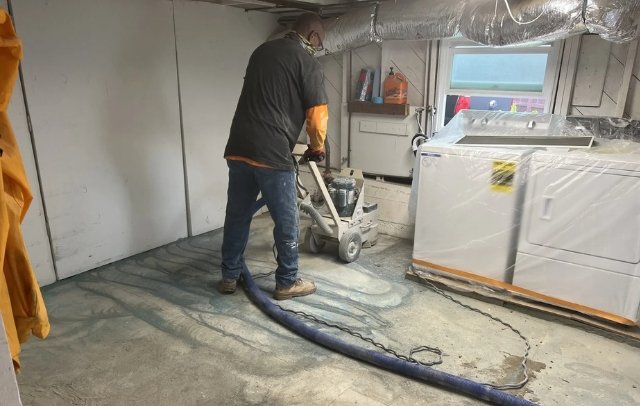
Step 2: Prep the Concrete
This is the step most people skip—and it’s the reason sealing fails.
The concrete has to be clean, dry, and properly prepared for the sealer to bond. If there’s residue from old cleaning products, enzyme buildup, efflorescence, or moisture in the slab, the sealer won’t stick. It’ll peel, bubble, or fail completely.
Prep includes:
- Removing surface residues and cleaning products
- Grinding or acid etching (if needed) to open the pores and improve bonding
- Drying the slab to the correct moisture level using moisture meters
- Addressing cracks and joints so they don’t become odor pathways
This can take time. But it’s the difference between a sealer that works and a sealer that fails.
Step 3: Seal with Odor Encapsulator
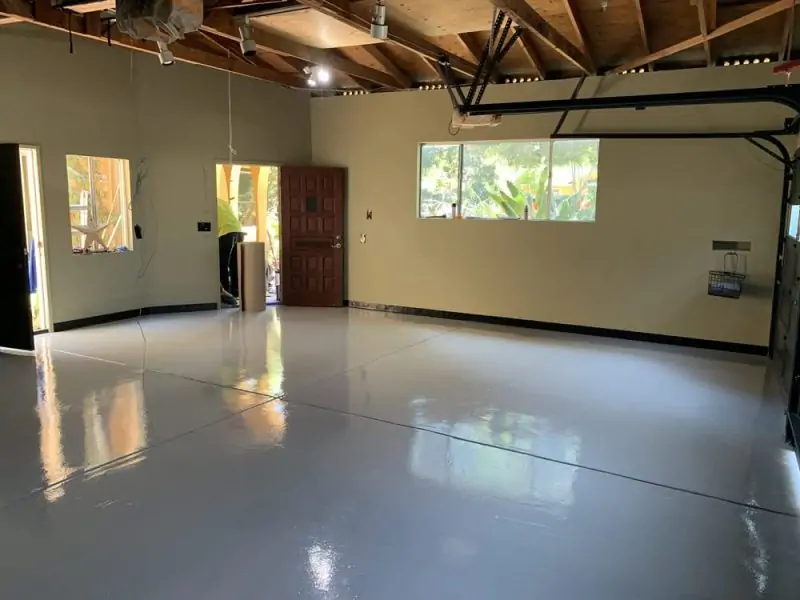
Once the concrete is prepped and dry, we apply a specialized odor encapsulation system. This isn’t regular garage floor epoxy. It’s a barrier coating designed to lock down odor molecules and prevent off-gassing.
The goal is simple: stop the odor from coming back up into the garage, basement, or living space.
In severe cases, this might include:
- Sealing the entire slab (not just the visible stains)
- Treating perimeter edges and wall lines
- Filling and sealing cracks and joints
- Applying multiple coats for maximum odor lockdown
Step 4: Verify Before Closing
We don’t rush to call the job done. We verify the odor is gone and the seal is holding before we close out the project. If there’s any concern, we address it while we’re still on-site.
When Concrete Replacement Is the Right Call
Not every slab can be saved. We wish that wasn’t true, but sometimes it is.
Replacement is usually necessary when:
- The slab is structurally compromised cracked, crumbling, or separating from the foundation
- Contamination is so severe and widespread that sealing would be masking a health hazard
- The slab has been repeatedly soaked and the contamination has spread throughout the entire thickness
We make this call based on what the slab is actually doing not based on what we hope it will do. If the slab is shot, we’ll tell you. If it can be sealed, we’ll tell you that too.
Real-Life Scenarios We See All the Time
Scenario 1: The Garage That Smells Worse After Pressure Washing
Someone pressure washes the garage slab thinking it’ll rinse out the urine. The garage smells fine while it’s wet. Then it dries out over the next few days, and the smell comes back stronger than before. Why? The water pushed contamination deeper into the slab, and as the concrete dried, it off-gassed all that odor into the garage.
Scenario 2: The Homebuyer Who Didn't Smell It During the Walkthrough
The walkthrough was on a cool day with the garage door open. No smell. They close escrow, move in during summer, and the garage reeks. The heat caused the slab to off-gas. The odor was always there they just didn’t encounter the right conditions to notice it.
Scenario 3: The Sealed Garage Floor That Still Smells
Someone seals the garage floor with epoxy thinking that’ll solve the problem. The smell gets worse. Why? The epoxy trapped moisture and odor under the coating, but it wasn’t an odor encapsulator. Now the smell is coming through the coating or bubbling up at the edges.
Scenario 4: The Basement That Smells Like Ammonia
The basement has a concrete slab floor. It smells like ammonia, especially when it’s humid or after rain. The odor is coming from urine that soaked into the slab years ago. Cats used the basement as a litter box area, and now the contamination is off-gassing through the concrete.
Scenario 5: The Rental Property That Won't Rent
A landlord can’t rent the unit because the garage smells like cat urine. They’ve had it cleaned professionally twice. The smell keeps coming back. Tenants walk through and immediately notice the odor. The property sits vacant because no one will lease it.
Scenario 6: The Seller Who Needs It Fixed Before Closing
The buyer’s inspection came back with odor issues. The seller needs it fixed within 2 weeks or the deal falls apart. There’s no time for trial-and-error. This is where professional concrete odor sealing comes in inspection, confirmation, prep, and permanent sealing on a timeline.
Frequently Asked Questions
Read the latest property how-to guides, and information and tips for buying, selling, investing and renting.
Pressure washing removes surface residue, but severe contamination is below the surface—in the pores, cracks, and joints. Pressure washing also adds moisture, which increases off-gassing as the slab dries. You’re not removing the urine. You’re just temporarily masking it with water, and then it comes back when the concrete dries out.
Regular garage floor epoxy is not designed to block odor. It’s designed to protect concrete from stains and moisture. If you seal over contaminated concrete with regular epoxy, the odor will either continue to off-gas through the coating or get trapped under it and smell worse. You need an odor encapsulation system, not a waterproof coating.
It depends on the thickness of the slab, the temperature, humidity, and airflow. A garage slab can take 3-7 days to dry on the surface, but moisture can remain deeper in the slab for weeks. That’s why sealing too soon (before the slab is dry) causes coating failure.
No. Ozone treats odor in the air. It doesn’t penetrate into concrete to remove contamination that’s embedded in the slab. You might get temporary relief while the ozone machine is running, but the smell will come back once the garage heats up or the slab gets damp.
It depends on the size of the area, the severity of contamination, and what prep work is needed. A small garage corner might be straightforward. An entire 2-car garage slab with severe perimeter contamination is a bigger project. We provide estimates after an inspection because every situation is different.
Yes. We offer a 5-year guarantee when we use our odor encapsulator sealing system. If we inspect, prep, and seal concrete according to our standards, and the odor comes back, we’ll make it right. But the guarantee applies when you follow the full scope of work we recommend during inspection. If we identify contaminated walls, baseboards, or framing and you choose not to address those materials, we can’t guarantee results on the concrete alone.
Yes. If the garage is attached to the house and shares an interior wall or door, odor can migrate into living spaces through air gaps, HVAC returns, or shared attic/crawl space areas. This is especially common when the garage heats up and creates positive pressure that pushes odor into the house.
Start with an inspection before closing. You need to know if the odor is surface-level (cleanable) or embedded in the slab (requires sealing). This lets you budget correctly and negotiate with the seller if needed. Don’t assume that fresh paint or new flooring means the odor is gone—sometimes sellers cover up evidence without fixing the source.
Our 5-Year Guarantee (What Separates Us from the DIY Guys)
Here’s something most people don’t know: You can learn a lot about a company from their guarantee.
When someone offers pressure washing, enzyme treatments, or ozone for concrete odor, ask them: “What’s your guarantee? What happens if the smell comes back?”
Most of the time, you’ll get vague answers or no guarantee at all. That’s because those methods don’t address the source. They treat symptoms, not the problem.
We’re different.
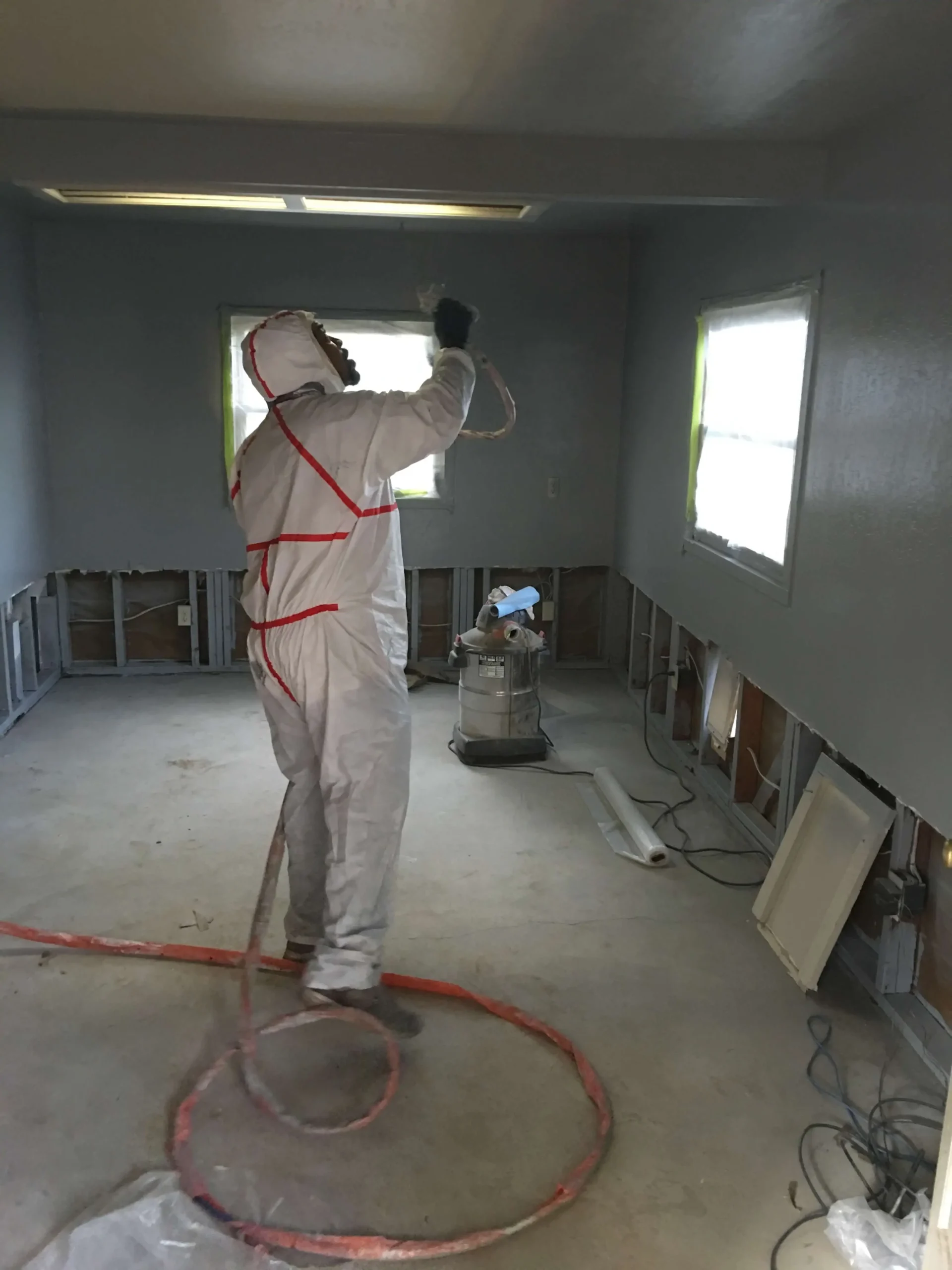
When we seal concrete using our odor encapsulation system, we back it with a 5-year guarantee. If we inspect, prep, and seal according to our standards, and the odor comes back, we’ll make it right.
Why can we offer that? Because we’re treating the source, not the air. We’re not masking odor with chemicals or hoping enzymes work. We’re physically sealing the concrete so it can’t off-gas ever.
Important note: We specialize in odor remediation. We don’t install decorative garage floor coatings or epoxy finishes. We seal concrete to eliminate odor. Once the odor is gone, you can have a flooring contractor come in and install whatever finish you want. We handle the problem no one else wants to touch.
Who We Help
We specialize in helping:
- Homebuyers who discovered garage or basement odor after closing and need it fixed before moving in
- Home sellers who need odor eliminated before listing or after a failed inspection
- Real estate investors who need properties remediated so they can flip or rent
- Landlords and property managers dealing with tenant damage between leases
- Homeowners who’ve tried everything and are ready for a permanent solution
Ready to Stop Living with Cat Urine Smell in Your Concrete?
Call us or use the contact form below to schedule an inspection. We’ll assess the contamination, confirm the scope, and give you a clear path to a permanent solution.
Our Most Requested Services
Cat Odor Removal
Dog Urine Odor Removal