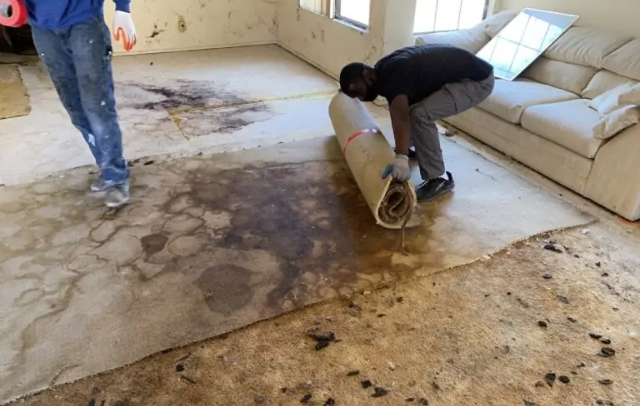
Concrete seems like it should be odor proof, but pet urine can soak into it and linger for months or even years. If your garage or basement still smells after you have mopped, scrubbed, and sprayed deodorizer, the problem is usually that urine has penetrated the pores of the slab or collected in cracks, control joints, and the edges where the slab meets the wall.
This guide breaks down what actually works to remove urine smell from concrete, what commonly fails, and how to build a plan that stops the odor from coming back.
Why pet urine odor sticks to concrete floors
Concrete is porous. Even when it looks solid, it contains tiny capillaries that can absorb liquids. Urine can also travel into:
- Hairline cracks
- Control joints and expansion joints
- Rough or unfinished areas
- The slab edge near drywall and bottom plates
- Old coatings that trapped contamination underneath
Once urine is inside the pores, surface cleaners may remove the top layer of residue but leave the deeper contamination untouched. Humidity can also reactivate dried residue and make odor flare up, especially in basements with limited airflow.
Quick self check: Is the odor really in the concrete?
Before you invest time and money, confirm you are chasing the right source. Concrete odor is often strongest:
- Right at floor level when you kneel down
- Near a corner or wall line
- In a specific patch that “blooms” when it is humid
- After the space has been closed up overnight
If the odor seems to come from the wall or the lower edge of drywall, the slab edge or framing may also be involved. If the odor is widespread, you may be dealing with multiple sources or repeated accidents over time.
What works vs what fails
This is the part most homeowners want. The difference between success and failure usually comes down to penetration, dwell time, and residue removal.
What works
1. Enzyme based urine treatment designed for porous surfaces
A proper urine treatment needs time to work and enough saturation to reach the contamination, without flooding the building materials around it. For concrete, the product must be suited for porous substrates, not just carpet or fabric.
What makes this approach work:
- It targets urine residues rather than masking odor
- It is applied generously enough to penetrate pores
- It is given adequate dwell time
- The area is kept damp long enough to stay active
- Residue is removed or rinsed properly afterward
2. Mechanical scrubbing plus proper extraction or rinse
Scrubbing alone can spread residue if you do not remove what you loosened. The best results usually come from a combination of agitation and removal.
Effective methods include:
- Stiff bristle scrubbing that reaches the texture of the slab
- Wet vacuum extraction if available
- Controlled rinse and removal rather than repeated mopping
The goal is not to make the floor look clean. The goal is to remove dissolved contamination from the pores.
3. Targeted sealing after correct prep
Sealing can work, but only when used in the right order. If you seal over active contamination without proper treatment and prep, odor can migrate to edges, return through cracks, or get trapped under coatings.
Sealing is most effective when:
- The slab has been properly cleaned and treated
- Moisture conditions are appropriate for coating
- Odor zones are confirmed and localized
- Cracks and joints are addressed correctly
This is also where underlying structure matters. If urine has migrated into areas connected to framing or adjacent materials, a deeper approach may be needed. A support option to understand this concept is Subfloor Odor Sealing, which focuses on odor trapped in porous structural layers rather than just surface cleanup.
4. Professional odor mapping before major steps
Concrete odor issues are often bigger than they appear. The odor zone can spread beyond the visible stain and can be stronger along edges or under stored items. If you have tried multiple products with no lasting result, it is usually time to find the true extent first.
Odor mapping helps you avoid:
- Treating the wrong area
- Under treating a large contamination zone
- Sealing the wrong section
- Missing cracks and edges that are still active
What fails
1. Bleach and strong disinfectants as a primary fix
Bleach may reduce odor briefly and can whiten stains, but it does not reliably break down urine residues deep inside concrete. It can also create harsh fumes and may damage nearby materials.
2. Vinegar and baking soda as the main solution
These can help with light, fresh odors on hard non porous surfaces, but concrete is a different situation. The odor usually lives below the top layer.
3. Mopping repeatedly with scented cleaners
Fragrance can make it feel better for a day, then the smell returns. Over time, layered scents can make the space feel worse and harder to diagnose.
4. Painting or coating without proper treatment and prep
This is one of the most common expensive failures. Trapped contamination can continue to off gas, and the odor may reappear at:
- The slab edge
- Cracks and joints
- Adjacent rooms
- Under the coating if it loses adhesion
5. Small spot treatment when the real zone is larger
Urine can spread in a halo pattern through pores. Treating only the darkest spot often leaves the perimeter active, which is why the smell feels like it never fully goes away.
Garage and basement specifics that change the plan
Garages
Garages often have:
- Tire rubber odor and oil smells that mask urine
- Temperature swings that increase off gassing
- Stored items that block access to slab edges
Urine may also occur near side doors, where pets are let out. That can mean contamination at the slab edge near framing.
Basements
Basements often have:
- Higher humidity
- Less ventilation
- More noticeable odor pooling
If your basement has carpet remnants, old tack strips, or baseboards, those can hold odor too. Concrete odor removal is most successful when the entire area is evaluated, not just the slab center.
Step by step: How to remove urine smell from concrete
Use this as a practical plan. If the odor is severe, old, or widespread, professional mapping first is often the fastest route.
1. Clear the area and remove absorbent items
Move out cardboard, rugs, fabric storage bins, and anything that could hold odor. If you leave contaminated items in place, you will not be able to tell what improved.
2. Dry clean first
Vacuum and sweep thoroughly. Dirt and dust can block treatment from penetrating.
3. Identify odor zones
Do a slow walk and sniff test at floor level. Pay attention to:
- Corners
- Wall lines
- Cracks and joints
- Areas under shelves or pet gates
If the odor zone is confusing, stop and map it rather than guessing.
4. Apply urine treatment correctly
Follow product directions, but the general principles are:
- Apply enough to penetrate pores
- Focus on the full odor zone, not only the center
- Keep it active for the recommended dwell time
- Avoid over wetting nearby drywall or wood
5. Agitate without spreading
Use a stiff brush and scrub in place. Work in sections and avoid pushing liquid across the floor into clean areas.
6. Remove what you loosened
This is where many DIY attempts fail. Use a wet vacuum if you have one. If not, use controlled rinsing and absorbent towels, then remove the liquid. The goal is to pull residue out, not leave it to dry back into the pores.
7. Dry thoroughly
Drying matters because lingering moisture:
- Makes odor stronger
- Triggers reactivation later
- Prevents coating from bonding if you plan to seal
Use airflow, fans, and a dehumidifier if needed.
8. Re test the next day
Check the odor after the slab is fully dry. If it is improved but still present, repeat treatment on the remaining odor zones rather than starting a new product.
9. Decide if sealing is the next step
If odor is greatly reduced but still returns, sealing may be appropriate after proper prep. If odor is strong and unchanged, the contamination may be deeper, broader, or connected to adjacent porous materials.
When it is time to stop DIY and schedule help
You should strongly consider professional help when:
- The odor returns every time it rains or humidity rises
- You have treated multiple times with no lasting change
- The odor seems to come from edges and corners
- You are preparing to sell, rent, or move into the home
- The space is a finished basement and you need certainty before reinstalling flooring
For homeowners in Los Angeles dealing with garage or basement pet odor problems, local conditions like heat and closed up indoor air can make odors feel more intense.
Frequently Asked Questions
Can pet urine really soak into concrete?
Yes. Concrete is porous, and urine can absorb into pores, cracks, and joints. That is why surface mopping often does not work.
Why does the smell get worse in humid basements?
Humidity can reactivate dried urine residues and help odor travel through the air. Basements also have less ventilation, so odor concentrates.
Is bleach a good way to remove urine smell from concrete?
Bleach can reduce odor briefly, but it often fails to remove the residue deep in porous concrete. It may also create harsh fumes.
Should I seal the concrete to stop the odor?
Sealing can work if the slab is properly cleaned, treated, and dried first. Sealing over active contamination often fails and can push odor to edges or cracks.
How do I know if I am treating the right area?
If the odor keeps returning, the contamination zone is often larger than the visible stain or extends into cracks and edges. Odor mapping is the best way to avoid guessing.