If you can still smell pet urine after cleaning, the odor is usually coming from urine salts and proteins that soaked into porous materials like wood subfloor, concrete, grout lines, and the joint where slab meets wall. The smell comes back when humidity rises or the area warms up because those residues keep off gassing. When cleaning alone is not enough, the goal becomes simple: remove as much contamination as possible, let everything dry fully, then lock what remains under the right sealer so odor cannot travel into the living space.
This guide breaks down when a shellac primer for urine odor is the better choice, when a water based odor primer can work, and how to prep subfloor and concrete so the seal actually holds.
Why pet urine odor is hard to seal in subfloor and concrete
Urine soaks deeper than you think
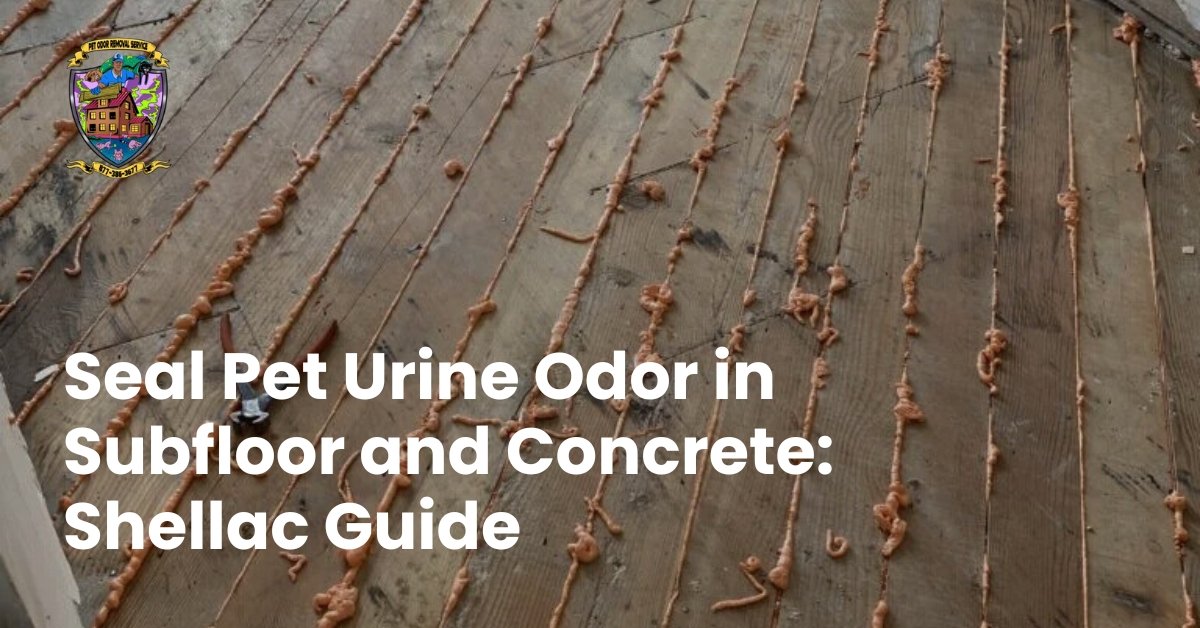
Wood subfloor and concrete both act like sponges. Urine can wick through wood grain, seams, nail holes, and cracks. On concrete, urine can penetrate pores and leave behind salts that continue to smell even after the surface looks clean.
Odor returns with moisture
If the area is not truly dry, any primer can fail, peel, or allow odor to push through. Moisture also reactivates residues, which is why homes often smell worse during rainy weeks, coastal humidity, or after mopping.
Some smells are not just urine
A pet accident can also trigger secondary odors like bacterial growth, damp padding, or odor absorbed into drywall paper near the floor line. If you only seal the floor but odor is also in the wall base, the smell can linger.
Internal link note for later placement: If you suspect odor migrated into wall materials, it is worth reviewing Drywall Odor Removal and Repair.
Shellac primer vs water based primer for urine odor
Both categories can work, but they do not perform the same in real world pet urine jobs.
Shellac primer strengths
Shellac based odor sealers are widely considered the most aggressive option for blocking tough odors. Products in this category are specifically marketed to eliminate pet urine odors and other severe smells.
Shellac is usually the better call when:
- The urine odor is strong or has been present for a long time
- The subfloor has dark staining or repeated accidents
- You are sealing after carpet or pad removal and the odor spikes on humid days
- You need maximum odor lock down before new flooring goes in
Tradeoffs to plan for:
- Strong application odor and more ventilation needs
- Fast dry time can make lap marks easier if you rush
- Cleanup is not as simple as soap and water
- Floor durability depends on the topcoat system you apply over it
Water based odor primer strengths
Water based odor killing primers are designed to seal odors while staying lower odor during application, and they can be easier to use indoors. Some are specifically marketed as sealing pet urine odors and other household smells.
Water based primers can be a good fit when:
- The odor is mild to moderate and contamination is limited
- You have good cleaning results but want a final lock in layer
- You are working in an occupied home and need a lower odor product
- You are sealing vertical surfaces or trim where heavy stain bleed is not the main issue
Tradeoffs to plan for:
- They may struggle with heavy urine saturation in wood or slab pores
- You may need extra coats and careful dry time between coats
- Performance depends heavily on surface prep and dryness
Choosing the right sealer for wood subfloor vs concrete
For wood subfloor
In many pet odor projects, the subfloor is the main reservoir. If the subfloor has visible staining, repeated accidents, or swelling, shellac is often the most reliable odor blocker.
Also consider the subfloor condition:
- If the wood is soft, delaminated, or crumbling, sealing may not be enough. Removal and replacement can be the only lasting fix.
- If the odor is isolated to a few boards, spot replacement plus sealing is often better than sealing the entire room.
If you need help deciding whether to seal or replace, this is exactly what Subfloor Odor Sealing is built for.
For concrete slabs
Concrete has two special challenges: alkalinity and pores.
Many shellac based products are used on concrete, and manufacturer guidance often lists concrete and concrete block as suitable substrates when properly prepped. But urine in concrete can be persistent, and some restoration guidance recommends multiple coats of a shellac based primer when odor remains after cleaning.
For concrete, your success depends on:
- Removing residues from pores as much as possible
- Letting the slab dry thoroughly
- Using the right primer approach for the slab surface and conditions
If you have moisture vapor coming through the slab, any coating system can fail. In that case, sealing odor becomes a broader flooring and moisture management problem, not just a primer choice.
Prep that makes or breaks odor sealing
Step one: confirm the odor source
Before sealing, make sure you are not missing another reservoir:
- Baseboards and the drywall paper edge at the floor line
- Tack strip zones near the perimeter
- Door jamb wood and trim
- Under cabinets where pets marked corners
- Cracks and control joints in concrete
If you want to avoid sealing the wrong area, consider an odor inspection first, especially in multi room homes or condos where smell travels.
Step two: deep clean and neutralize
A practical approach:
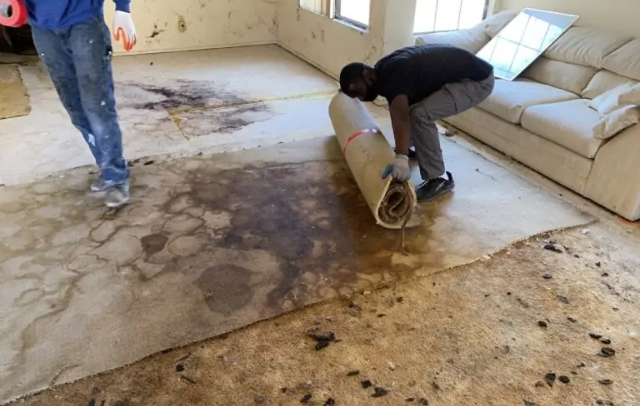
- Remove all soft goods that hold urine, including carpet pad and damaged underlayment
- Vacuum thoroughly with a HEPA vacuum if available
- Use an enzyme based cleaner designed for pet urine on the exposed subfloor or concrete
- Allow proper dwell time and repeat if the area was heavily saturated
- Rinse if the product requires it, then extract or wet vac to remove residues
Avoid using bleach on urine contamination because it can create irritating fumes and does not address urine salts deep in porous materials.
Step three: dry longer than you think
Odor sealing fails constantly because the surface feels dry but is not dry in depth.
- Use fans and dehumidification
- Keep the home at a stable temperature
- Do not prime until the surface is fully dry
Some shellac primer guidance includes moisture limits and dew point rules to prevent failure, which reinforces how important dryness is for performance.
Step by step: sealing pet urine odor in subfloor and concrete
Use this as a practical checklist before you reinstall flooring.
1. Isolate and protect the area
- Open windows when possible and create airflow
- Turn off HVAC return air in the work zone if odor will spread
- Mask doorways with plastic if needed
2. Remove contaminated materials
- Pull carpet and padding
- Remove tack strip if it is urine soaked
- Remove swollen or delaminated wood underlayment
3. Clean and neutralize
- Apply enzyme cleaner to the affected zones
- Work it into seams and edges where urine wicks
- Extract residues and allow full dry time
4. Prep the surface for primer adhesion
For wood subfloor:
- Scrape off adhesive residue
- Lightly sand glossy areas if needed
- Vacuum dust thoroughly
For concrete:
- Scrape off mastic and debris
- Clean salts or residue on the surface
- Make sure pores are open and not coated with old glue
5. Choose your primer system
Use shellac when:
- Odor is strong
- Staining is heavy
- You need the most dependable odor lock
Use water based odor primer when:
- Odor is lighter
- Contamination is limited
- You need lower application odor and easier cleanup
6. Apply primer correctly
- Apply a full wet coat with no thin spots
- Cut in edges carefully because perimeter gaps are common odor pathways
- Let the primer fully cure before recoating or topcoating
Shellac products often cover well in one coat in many situations, but porous surfaces may require a second coat depending on absorption. For stubborn concrete odor, some restoration guidance recommends multiple coats of a shellac based primer to fully seal remaining odor.
7. Topcoat or flooring installation
- Follow the primer manufacturer guidance on compatible topcoats and cure time
- If installing LVP, laminate, or engineered wood, confirm adhesive and underlayment compatibility
- Do not trap moisture under new flooring
8. Verify before you close it up
- Smell test after the primer cures
- Do a humidity test by running a humidifier briefly or waiting for a more humid day
- If odor returns, you likely need another coat or you missed a reservoir such as the wall base
Common mistakes that cause odor to come back
Sealing without removing urine soaked padding and adhesive
Odor can remain in old pad fibers, tack strip wood, and carpet glue. Sealing the slab alone will not fix those reservoirs.
Spot sealing when urine wicked beyond the visible stain
Urine spreads. If you only seal the darkest spot, the lighter halo can still off gas.
Priming before the surface is dry
Even a great shellac primer for urine odor can fail if moisture is present.
Ignoring drywall and base areas
When pets repeatedly mark corners, urine can wick into drywall paper at the bottom edge. If you suspect that, use a coordinated plan that includes Drywall Odor Removal and Repair.
When to call a pro for subfloor odor sealing
If any of these apply, professional help usually saves time and prevents repeated flooring failures:
- Multiple rooms affected
- Odor is strongest near walls or under cabinets
- The subfloor feels soft or swollen
- You are preparing a home for sale or move in and need reliable results
For homeowners in San Diego dealing with pet odor problems across multiple surfaces, a targeted inspection can pinpoint what needs sealing versus replacement.
Frequently Asked Questions
What primer is best for sealing pet urine odor in a wood subfloor?
For strong urine odor and heavy staining, shellac based primers are often the most reliable at blocking odor.
Can a water based odor primer seal severe cat urine smell?
It can work for lighter contamination or as a finishing layer after deep cleaning, but severe saturation in porous wood or concrete often needs a stronger odor blocking system.
How many coats do I need to seal urine odor on concrete?
It depends on severity and porosity. After cleaning, some restoration guidance recommends multiple coats of a shellac based primer when odor persists on concrete.
Why does urine odor come back after I prime?
The most common causes are missed reservoirs, thin coverage at edges or seams, or priming before the surface is fully dry.
Do I need to seal drywall if the urine was on the floor?
If pets repeatedly marked corners or the smell is strongest at the wall base, urine can wick into drywall paper. In those cases, targeted drywall odor removal and repair can be part of the fix.