If you keep smelling urine smell under carpet even after cleaning, the problem is usually not the carpet fibers. Most lingering odor comes from urine that soaked into the pad, the backing, or the subfloor, and then wakes up again when humidity or cleaning moisture hits the area.
This guide helps California homeowners and renters figure out where the odor is living so you can choose the right fix and stop wasting time on surface only treatments.
Why this question matters
Carpet is only the top layer. Under it, the pad acts like a sponge and the subfloor is often porous wood. Once urine gets into either layer, smell can return during damp weather, after steam cleaning, or when you run a humidifier.
If you are in Fresno, this can show up strongly during winter rain cycles or any time the indoor air feels heavier.
Fast signs the urine is in the carpet padding
The odor spikes when the carpet gets damp
If the smell is mild most days but gets sharp after shampooing, steam cleaning, rain humidity, or spills nearby, that often points to residues below the surface reactivating.
The carpet looks fine but the smell is strongest at floor level
When odor is concentrated right at the carpet surface and not coming from vents or walls, it usually means the source is in the carpet layers.
The spot feels dry yet the smell persists
A dry surface does not mean the pad is clean. Padding can hold old deposits even after the top looks normal.
The suspected area is larger than the visible stain
Urine can spread outward and downward. The “center point” may be small, but the pad contamination can extend wider than expected.
Red flags that suggest the subfloor is involved
The same area has been hit repeatedly
Repeat accidents in the same zone can push contamination through the pad and into wood seams and fastener holes.
Odor returns quickly after deep cleaning
If the smell improves briefly but comes back fast, you may be cleaning the top while the source sits below.
Edges and corners are the worst
Perimeter issues often involve the pad edge, tack strip area, and the subfloor near walls. That is harder to treat from above.
You smell it even when carpet is lifted
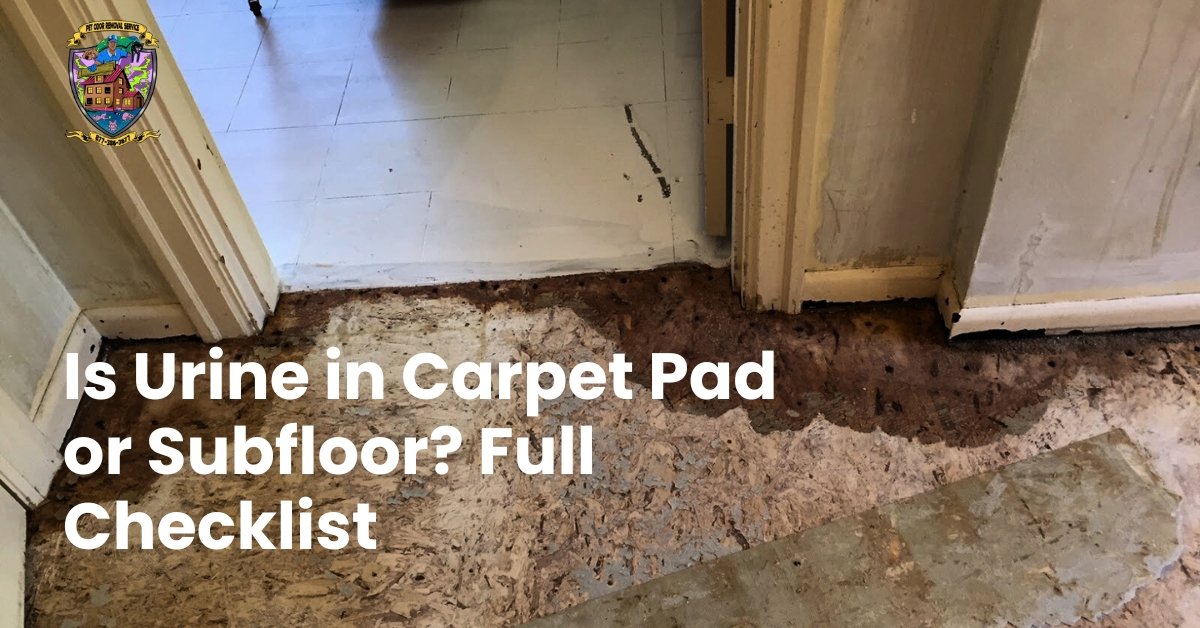
If you ever pull back a corner and the wood itself smells sour or sharp, the subfloor is likely holding odor.
If you are a renter in Woodland Hills, document this early. Photos of stained pad or discolored wood can help you communicate clearly with property management before repairs escalate.
Step by step checklist to locate the source layer
Set aside 60 to 120 minutes. The goal is to identify whether the odor is sitting in the pad, the subfloor, or both.
Step 1: Map the likely zones
- Mark areas near litter boxes, dog beds, and favorite corners
- Mark along walls and behind furniture
- Mark doorways and near patios
- Mark any room where accidents could have been missed
Step 2: Do a controlled sniff test
- Turn off fans for 10 minutes
- Get close to the carpet surface and sniff lightly around each suspect zone
- Mark the strongest points with painter’s tape
If odor is strongest right at the floor in one or two spots, you likely have localized contamination.
Step 3: Use a UV light as a locator, not a verdict
- Darken the room as much as possible
- Sweep the UV light slowly across the carpet
- Mark glowing areas with tape
- Let the marks guide your next checks
UV can help reveal dried residues, but it is not perfect. Some stains glow weakly if moisture is present, and carpet materials can affect what you see. Use it to narrow down where to test next.
Step 4: Do a press transfer test to check for pad involvement
- Put a clean white paper towel over the marked area
- Press firmly with your body weight for 10 seconds
- Look for yellowing or odor on the towel
If you get discoloration or strong odor transfer even when the surface seems dry, the pad is a prime suspect.
Step 5: Do a safe lift and peek at an edge
This step often answers the question in minutes.
- Choose a spot at a closet edge or room perimeter near your strongest mark
- Carefully lift a small corner of carpet just enough to see the underside
- Look at the backing for staining or stiff residue
- Check the pad surface for discoloration
- Smell the pad directly
- Pull the pad back slightly and smell the subfloor
What the results usually mean
- Pad smells strong but wood smells mild, most odor is in the pad
- Wood smells strong even after you pull pad back, subfloor is involved
- Both smell strong, you likely have a layered problem
If you are not comfortable lifting carpet, this is a good point to use a professional assessment. Learn what to expect from an Odor Inspection and Detection appointment when you want clarity without guessing.
Step 6: Check how far the contamination spread
- Measure the taped area
- Add at least 6 to 12 inches around the edges as your working zone
- If multiple marks connect, treat it as one larger zone, not separate dots
This prevents the common mistake of treating only the center while leaving the surrounding pad untouched.
Step 7: Decide what kind of fix matches your findings
- If it is mostly in the pad, replacement is often the most reliable path when odor keeps returning
- If the subfloor is affected, cleaning alone may not be enough and sealing may be needed after proper prep and drying
- If the damage is widespread, removing materials can be more cost effective than repeated treatments
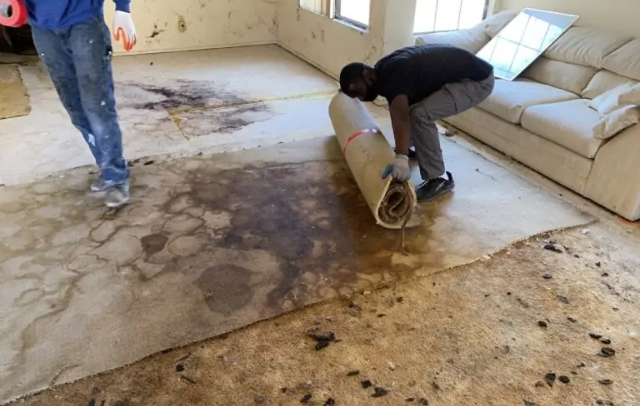
If you suspect the pad is saturated or damaged, read about Residential Carpet Removal options that are designed for pet odor situations.
If wood is holding odor, Subfloor Odor Sealing may be the step that prevents smell from coming back through new flooring.
If you want local help, see pet odor removal in Fresno for service details in your area.
If you are outside Fresno, check the Service Areas hub to confirm coverage.
What to do next based on what you found
If the odor is mainly in the carpet pad
Padding holds deposits that can reactivate with moisture. If you choose to treat instead of replace, the cleaner must reach pad depth and the area must dry thoroughly. If the pad is heavily affected, replacement often saves time and frustration.
If the subfloor is involved
Wood can absorb urine and trap it in seams and porous spots. When the wood itself smells after the pad is pulled back, sealing is often considered after proper cleaning and drying, especially if you plan to keep the home and want long term odor control.
If you are unsure
Multiple rooms, mixed odors, or inconsistent smell patterns can make DIY diagnosis tricky. A targeted inspection prevents over replacing materials and helps you treat only what is necessary. You can start by visiting OdorXpert and requesting help.
Frequently Asked Questions
How can I tell urine reached the subfloor without removing the whole carpet?
Do a small lift and peek at a closet edge or perimeter near the strongest odor mark. Smell the pad and then the wood. If the wood smells strong, the subfloor is likely involved.
Why does the smell come back after steam cleaning?
Moisture can reactivate dried uric acid residues left in the pad or wood, which is why odor often returns during humidity or after wet cleaning.
Does a UV light confirm pet urine every time?
No. UV can help locate possible areas, but results vary by surface, dryness, and carpet materials. Use it to map, then confirm with a press test and a lift and peek.
If the pad is contaminated, can I just deodorize from the top?
Light cases sometimes respond to deep treatment and strong drying, but heavily affected padding often continues to hold odor. Replacement is commonly the reliable choice when smell returns repeatedly.
When is sealing the subfloor the right step?
When the wood still smells after the pad is removed and the area is cleaned and fully dried, sealing can help block remaining odor from bleeding back through new materials.
If you want a clear answer fast, book an Odor Inspection and Detection visit so you know whether you are dealing with the pad, the subfloor, or both.