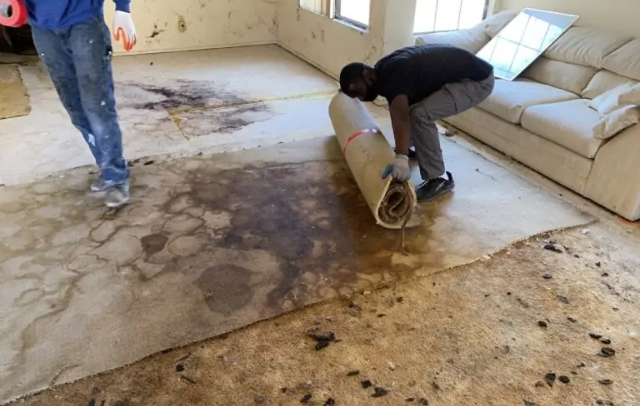
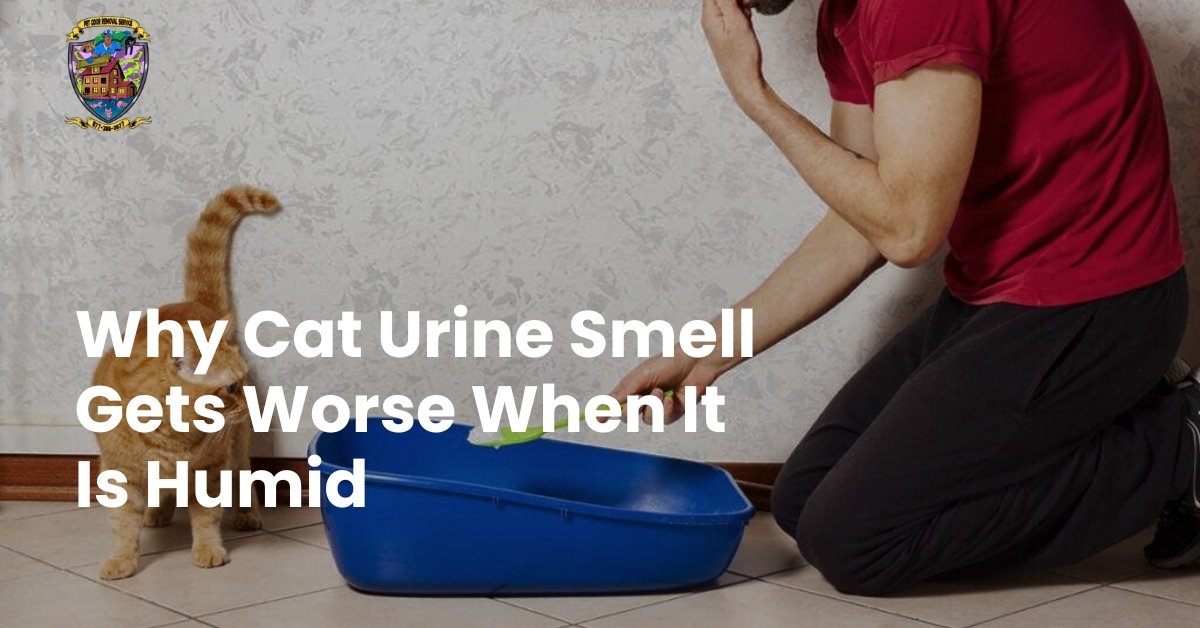
If you have ever thought, “The cat urine smell is worse when humidity spikes,” you are right. Homes that seem fine on dry days can suddenly smell like urine again when it rains, when coastal fog rolls in, or when indoor humidity climbs. This happens because dried urine residue is not truly gone. It is often still in the carpet fibers, the pad, baseboards, grout lines, or the wood below. Humidity reactivates the residue and helps odor molecules travel through the air more easily.
Why urine odor comes back when it is humid
Humidity affects urine odor in a few practical ways that homeowners can notice right away.
Moisture rehydrates dried urine salts
Pet urine contains compounds that dry into crystals and salts. When humidity rises, those dried residues absorb water from the air. That moisture can dissolve the residue again and make it more active, which means the smell releases more strongly.
You might notice this most in:
- Carpeted rooms
- Closets where air does not circulate well
- Corners near litter boxes
- Areas near windows that collect condensation
Warm damp air carries odor farther
Humid air tends to feel heavier and can hold onto odor molecules longer. Add warmth from heaters, sun through windows, or cooking, and the smell can spread faster through the home.
That is why people often say it smells worst:
- During rainy weeks
- After a shower when bathroom humidity rises
- When the heater turns on after a damp day
- When windows stay closed for days
Humidity increases activity in porous materials
Porous materials act like sponges. Carpet pad, drywall, and unfinished wood can hold onto contamination. When humidity rises, those materials can release more odor.
If the smell seems strongest at floor level, that is a clue the source may be in:
- Carpet and pad
- Subfloor seams
- Baseboards and the lower edge of drywall
The common “humid day odor” scenarios
If you want to stop the odor, it helps to identify which scenario fits your home.
Scenario 1: The odor is mostly in carpet fibers
This is more common when accidents were caught quickly and cleaned, but residue remains. Humidity makes the leftover residue noticeable again.
Clues:
- Smell is strongest right after vacuuming or when you walk across the area
- No visible staining but odor returns periodically
- Odor is localized to one section of carpet
Scenario 2: The odor is in the padding or beneath the carpet
Carpet pad is absorbent and can trap contamination even if the surface looks clean.
Clues:
- Odor is strongest when you kneel down near the spot
- The smell seems “deep” and persistent
- The area feels slightly stiff or uneven compared to surrounding carpet
Scenario 3: The odor is in the subfloor or along edges
If urine soaked through to the wood below, humidity can cause the odor to reappear over a wider area. This often happens along walls where urine wicked under baseboards or where repeated accidents happened.
Clues:
- Odor is strongest near baseboards or corners
- Smell seems to spread beyond the original accident spot
- Odor returns quickly after cleaning
When the wood structure is involved, sealing may be part of the solution. This is where Subfloor Odor Sealing becomes relevant because it targets odor that has absorbed into the building materials.
Scenario 4: Coastal humidity and fog make it worse
Coastal areas can have frequent moisture swings, even when it is not actively raining. In places like San Francisco, fog and marine air can raise indoor humidity and trigger odor release from old residues.
If you are dealing with recurring odor in a coastal home or apartment, see the local service context for pet odor removal in San Francisco.
Why cleaning sometimes makes it worse on humid days
A frustrating pattern is cleaning hard, thinking the smell is gone, then noticing it again when the weather changes. A few common reasons:
Too much product, not enough extraction
If a cleaner is applied but not removed properly, moisture can remain in the carpet and pad. Humidity then adds more moisture, and the area continues to release odor.
The wrong product for the material
Some cleaners mask odor temporarily but do not break down urine residue. Others are not designed to penetrate into pad or porous materials.
The odor source is deeper than the surface
Surface cleaning can improve the smell in the moment, but it will not fix contamination in pad, subfloor, or drywall edges.
If the odor is cat related and keeps returning, it is usually time to treat it as a deeper issue rather than a surface cleaning issue. A professional approach like Cat Urine Odor Removal is designed to identify where the urine traveled and use the correct method for each layer.
How to stop urine odor from coming back when it is humid
The goal is not to mask the odor for a day. The goal is to remove or isolate the residue so humidity cannot reactivate it.
Step by step checklist for humid weather odor control
- Identify the highest humidity rooms
Start where the smell returns first. Bathrooms, closets, and bedrooms with closed windows often hold humidity longer. - Remove fragrance sources for 24 hours
Candles and air fresheners make it harder to tell what improved. You want a clear read on the urine odor. - Confirm the likely odor zones
Sniff low near the floor and along edges. If the odor is stronger near baseboards, the source may be in pad or wood. - Dry the area before you treat it
If the carpet or pad is even slightly damp, drying comes first. Use airflow and, if you have one, a dehumidifier. Treating wet materials often spreads contamination. - Use the right urine treatment method for the layer
Surface fibers, pad, and subfloor do not respond to the same approach. If the odor is only in surface fibers, targeted treatment may work. If it is in pad or wood, it often requires deeper steps. - Rinse and remove residue rather than only applying product
For carpeted areas, the best outcomes often come from a combination of urine specific treatment plus extraction or thorough removal of what was loosened. Leaving dissolved residue behind is a common reason odor returns. - Check the edges and corners
Urine commonly wicks outward and under baseboards. If you only treat the center of a spot, humidity can still reactivate residue at the perimeter. - Address the subfloor if you suspect absorption
If repeated accidents happened in the same place, or if odor persists after proper surface work, the wood below may be holding it. This is where a targeted plan that can include Subfloor Odor Sealing can prevent future humidity driven odor release. - Re test on a humid day
Odor testing after a dry day can be misleading. If possible, check again when humidity is higher, or after running a humidifier briefly, to confirm the smell does not return. - If you keep chasing it, schedule a professional evaluation
If the odor comes back repeatedly, it usually means the source was not fully addressed. Booking a professional cat urine assessment can save money compared to repeated DIY attempts. Start with Cat Urine Odor Removal and use the consultation to confirm whether the odor is in the fibers, the pad, or the structure below.
When you should consider professional help
Humidity triggered odor is a strong signal that contamination is still present. Professional help becomes especially useful when:
- The smell returns within days of cleaning
- Multiple rooms are affected
- The odor is strongest along walls or corners
- The home has a history of repeated accidents
- You are planning to move, rent, or sell and need a reliable fix
If you live in a coastal humidity zone, recurring odor can be even more stubborn. In those cases, reviewing local options for pet odor removal in San Francisco can help you understand what tends to fail and what tends to work in foggy, moisture swing conditions.
Frequently Asked Questions
Q: Why does the cat urine smell worse when humidity rises?
A: Humidity can rehydrate dried urine residue in porous materials and make it release odor again, especially in carpet, pad, and along baseboards.
Q: If the smell comes back when it rains, does that mean the urine is still there?
A: Usually, yes. Returning odor is a sign that residue remains somewhere, often below the surface, and humidity is activating it.
Q: Will a dehumidifier fix urine odor permanently?
A: A dehumidifier can reduce how strongly you smell it, but it does not remove the residue. Permanent improvement comes from removing or isolating the contamination.
Q: What is the biggest reason DIY enzyme cleaners fail in humid weather?
A: The source is often deeper than the surface, or residue is loosened but not removed, so humidity triggers it again.
Q: When is subfloor sealing needed for pet urine odor?
A: Sealing is often considered when urine has absorbed into wood or seams and odor returns despite correct surface and padding level work. Learn more about Subfloor Odor Sealing.
Q: I live near the coast and the smell is worse with fog. What should I do first?
A: Start by identifying the odor zones and drying the area. If the odor keeps returning, a structured plan is usually needed. You can reference pet odor removal in San Francisco for local context and common causes in coastal homes.