If you are dealing with cat urine smell or dog urine odor in your home, one of the first questions is always the same: how much will it cost to fix this permanently. The frustrating part is that pet odor removal is not priced like a simple cleaning job, because the odor source can be surface level, below the carpet, inside the subfloor, or even inside wall edges. Two homes can smell “similar” from the doorway, but the correct fix and total price can be completely different.
This guide explains the factors that affect pet odor removal cost in California, how to avoid paying for the wrong solution, and how to budget based on the depth of contamination. It is written to help you get clarity before you spend money on repeated DIY attempts or replace flooring unnecessarily.
Why pet odor removal pricing varies so much
Pet odor pricing varies for one main reason: odor is not a single problem. It is a combination of source location, source depth, and the method required to remove or block the odor so it does not come back.
A surface level accident on a sealed tile floor is one type of job.
A repeated cat urine hotspot that soaked into carpet padding and the wood subfloor is a totally different job.
A corner where urine wicked into the drywall edge is another category.
If you want to understand why odor keeps returning and why that matters for pricing, read Blog 1 on why cat urine smell keeps coming back. If you want to locate the exact hotspot before you spend, Blog 2 on how to find hidden pet urine odor is the best starting point. The more accurately the source is identified, the less money is wasted.
The biggest cost driver: how deep the urine went
Think of pet odor removal in layers.
Top layer is the surface you can see. That might be carpet fibers, laminate surface, or tile.
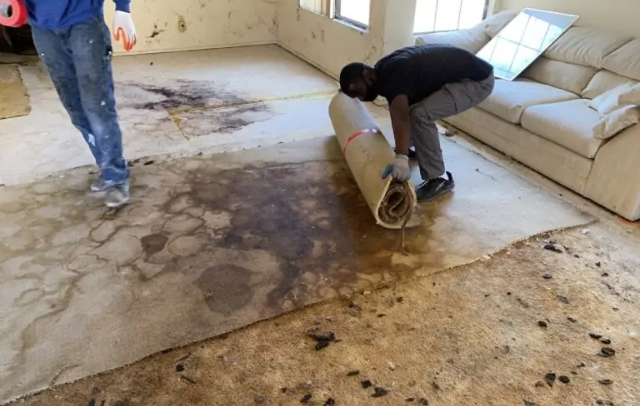
Second layer is the hidden absorbent layer, which is often carpet padding.
Third layer is the structure, which is the subfloor, baseboards, and sometimes drywall edges.
Most of the higher cost jobs happen when urine reaches the second or third layer, because the fix often requires removal, sealing, or repair rather than only cleaning.
Blog 4 covers pet urine odor in carpet padding and how to decide save or replace. Blog 5 explains subfloor pet urine odor and permanent solutions. Those two layers are usually where the bigger budget comes in.
Factor 1 Odor inspection and detection versus guessing
Many homeowners try to save money by skipping inspection. Sometimes that works, especially for fresh surface accidents. But if the odor keeps coming back, skipping inspection often increases total cost because money is spent on repeated treatments that never reach the source.
A professional odor inspection can be a cost saver in cases where you are unsure if the odor is in the carpet, padding, subfloor, or wall edges. It is especially useful when you are preparing for move out, selling, renting, or need a guaranteed result.
Odor Inspection and Detection
Factor 2 Size of the contaminated area and spread pattern
Pricing is influenced by how much area needs to be treated, sealed, or repaired.
A single small accident can be treated in a limited zone.
Repeated accidents often create a spread pattern where urine travels sideways in padding or into seams. That spread means the treatment area is larger than the visible stain.
This is why people are surprised by quotes. The professional is not pricing the stain you see. They are pricing the full affected zone required for a permanent fix.
Factor 3 Cat urine versus dog urine and severity
Both cat and dog urine can be severe, but the pattern often differs.
Cats frequently create repeated hotspots in corners or protected areas, which increases depth and structural involvement.
Dogs may create larger volume accidents, and repeated incidents can also reach the subfloor quickly.
The pricing difference is usually not about cat versus dog alone. It is about repetition, depth, and the materials involved.
Factor 4 Flooring type and how accessible the source is
Accessibility changes labor and method.
Carpeted floors can hide odor in padding, but they can also be opened in targeted areas for inspection and treatment.
Laminate and engineered wood often allow urine to travel into seams, and removing planks may be required to treat below.
Tile and grout lines can hold residue, and if urine seeped under tile, remediation can be more involved.
Concrete slabs can hold odor in porous areas and cracks, and the solution may require specialized sealing.
The more difficult it is to access the true source, the more time and labor the job requires, which affects pricing.
Factor 5 What solution is required: cleaning, treatment, sealing, or replacement
This is the most important cost section. Different solutions sit in different cost tiers because they require different levels of labor and materials.
Tier 1 Surface level treatment
This is the least expensive category, and it includes surface cleaning, neutralization, and drying. It works when urine has not soaked into padding or structure.
If you are deciding whether DIY enzyme cleaners are enough, Blog 3 explains enzyme cleaners versus professional pet odor removal and when each makes sense.
Tier 2 Carpet padding remediation or replacement
If padding is involved, pricing increases because the job may require lifting carpet, treating the padding layer, or replacing padding in a localized zone. Even if carpet is saved, labor increases because the work happens below the surface.
If you suspect padding is the main source, Blog 4 helps you decide whether padding can be saved or should be replaced.
Tier 3 Subfloor odor sealing and structural solutions
When urine reaches the subfloor, a permanent fix often requires subfloor odor sealing, repair, or partial replacement. This is typically a higher tier because it involves prep, sealing products, cure time, and verification.
Tier 4 Wall edge repairs and drywall involvement
When urine wicked into baseboards or drywall edges, the job can require localized drywall repair and odor blocking methods. This increases complexity because multiple materials are involved.
Factor 6 Number of hotspots and how the home is laid out
One hotspot is simpler than three hotspots in different rooms.
Multi-room involvement increases time because each area needs detection, treatment, drying, and verification. Homes with furniture, tight closets, or heavy items can require more labor to access contaminated zones, which affects cost.
Apartments and rentals also vary because access rules, time windows, and move out deadlines can create urgency.
Factor 7 Urgency and timeline requirements
If you need the job done quickly due to a move out date, rental turnover, or listing schedule, pricing can be affected by scheduling constraints. The work itself may also require drying and cure time. Sealing and repairs cannot always be rushed without affecting results.
The best way to keep cost controlled is to diagnose early, schedule proactively, and avoid last-minute emergency work.
Factor 8 Quality of work, warranty approach, and verification
One reason quotes differ is how permanent the fix is intended to be.
A lower quote may focus on surface deodorizing that reduces odor short term but does not guarantee it will not return.
A higher quote may include inspection, deeper structural solutions, and verification steps to ensure odor does not return under humidity changes.
When comparing quotes, ask how the provider confirms the source and how they verify success. If you are paying for a permanent fix, verification matters.
How to estimate your likely cost tier without guessing
You can do a quick self-assessment before calling.
If the odor was a single recent incident, the carpet looks clean, and odor does not return with humidity, you might be in a surface level tier.
If odor returns after cleaning or you smell it strongest at floor level, padding is likely involved.
If you replaced carpet or padding and odor returned, or odor spikes with humidity and heat, subfloor involvement is likely.
If odor is strongest in a wall corner even after floor cleaning, baseboards and drywall edges may be involved.
The purpose of this guide is not to make you diagnose perfectly. The purpose is to help you avoid the most expensive mistake, which is paying for surface cleaning when the source is structural.
The most expensive mistake homeowners make
The most expensive mistake is repeating the same solution that already failed.
If you have tried multiple enzyme cleaners and the smell keeps returning, the problem is usually depth or boundary, not brand.
Blog 3 explains why enzyme cleaners fail when the source is below the surface. Blog 5 explains why subfloor odor needs structural fixes. In many cases, odor inspection first prevents repeated spending.
What to prepare before requesting a quote
You can speed up the quoting process and get a more accurate estimate if you prepare a few details.
Where the odor is strongest and whether it is near walls or corners
Whether it is cat, dog, or unknown
How long the problem has existed
Whether you have cleaned or shampooed the area
Whether the odor returns with humidity
Whether carpet, padding, or flooring has been replaced
Approximate size of the suspect area
Photos if there is visible staining or floor damage
The goal is to help the provider understand whether the job is surface level or structural before arriving.
California specific considerations that can influence pricing
California has a wide range of home types and service environments. Pricing can be influenced by regional labor rates, building materials, and property types.
Apartments in larger cities can have access constraints and tighter schedules.
Older homes may have layered flooring materials that require extra care when opening floors.
Some coastal areas experience higher humidity patterns that can reactivate odor, which makes verification and sealing more important.
Instead of focusing on city-specific numbers, focus on choosing the right fix for your material and depth. That is what determines permanent results.
When you should consider replacement rather than treatment
Replacement is not always required, but it becomes cost-effective in certain scenarios.
Carpet and padding are heavily saturated across a large area
Carpet fibers are damaged and permanently stained
Odor persists after multiple treatment attempts
Subfloor is damaged, swollen, or structurally compromised
You need guaranteed results quickly for move out or sale
In these cases, Residential Carpet Removal for Pet Odor Damage can be the cleanest path, especially when paired with subfloor sealing if needed.
FAQs
Why do quotes for pet odor removal vary so much
Because the odor source can be surface, padding, subfloor, or walls. Each requires a different method, labor level, and materials.
Is inspection worth it or should I just treat the carpet
Inspection is worth it when odor keeps returning, when you suspect padding or subfloor involvement, or when you need certainty before spending money.
Does subfloor sealing cost more than carpet cleaning
Yes, because it is a structural solution that requires access, prep, sealing products, cure time, and verification. It is often the most reliable permanent fix when the subfloor is contaminated.
Can I save money by replacing carpet and padding myself
Sometimes, but if you do not confirm subfloor and wall edges, odor can return. Replacement without treating the source can become more expensive in the long run.
How do I know if I need drywall repair
If odor is strongest along the wall edge or corner even after floor treatment, urine may have wicked into baseboards or drywall edges, which may require targeted repair.