If you keep smelling urine near a wall or corner even after cleaning the floor, you are not alone. Many homeowners assume urine odor must be in the carpet, but in real homes the wall system can absorb odor too. That is why the smell can feel like it is coming “from the air” or “from nowhere,” especially when humidity rises or the heater turns on.
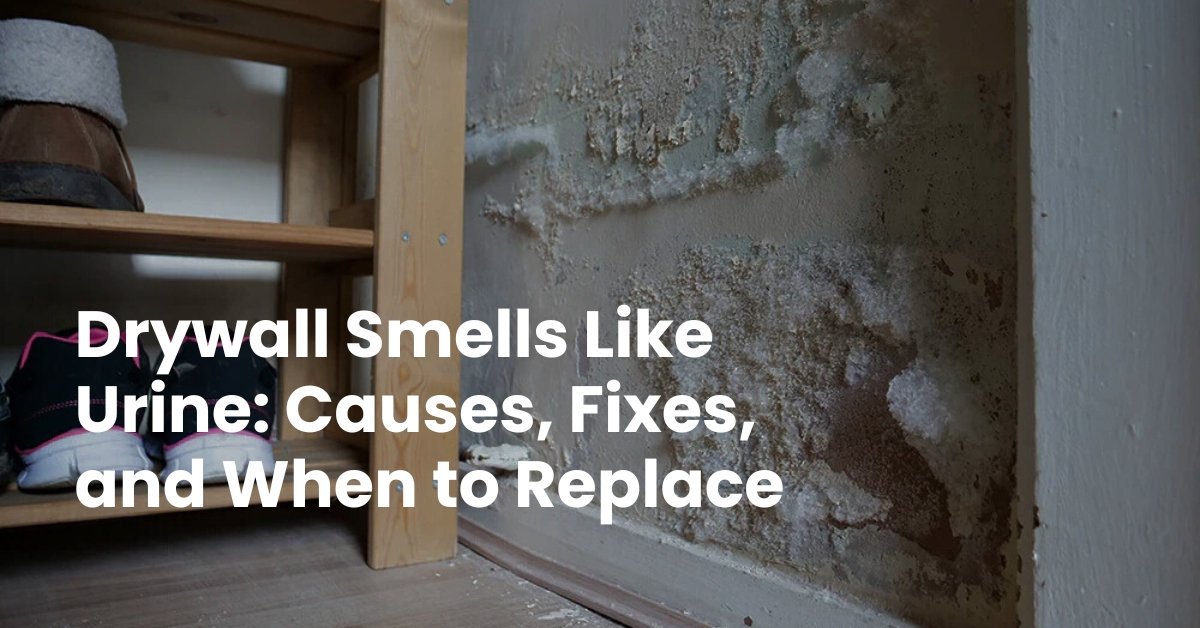
Here is the key idea. When drywall smells like urine, the source is usually not the middle of the wall. It is almost always the lower wall zone where the wall meets the floor. That area includes baseboards, the seam behind the baseboard, the bottom edge of drywall, and sometimes the framing area right behind it.
If odor keeps returning again and again, read this related guide as well: why cat urine smell keeps coming back.
This blog will help you confirm whether the wall is really involved, explain what causes urine odor in drywall and baseboards, and show you the safest permanent fixes, including when replacement is the smartest option.
Why drywall and baseboards can hold urine odor
Drywall is made to be finished and painted, not to resist liquids. The paper facing and the gypsum core can absorb moisture. When urine happens close to a wall, several things can occur.
First, urine can seep into the seam where flooring meets the wall. Even a tiny gap is enough.
Second, urine can slide behind baseboards. Baseboards are not airtight. A liquid can slip behind them and sit against the wall edge.
Third, urine can wick upward. When a puddle sits against a baseboard, the moisture can climb into the drywall edge by capillary action, especially if the accident sits for a while before discovery.
Fourth, urine odor can reactivate. Even if the wall dries, residues can release odor again when humidity rises or when the area gets lightly re-wet during cleaning.
If you want a step-by-step way to locate exactly where the odor is strongest before you repair anything.
Common situations where the wall gets contaminated
Most drywall urine odor issues happen in predictable patterns.
Cats often mark near corners, along baseboards, or behind furniture placed against walls. This is why wall edge odor is often connected to cat incidents.
Dogs often have accidents near doors, hallways, or along common walking paths. If that accident happens near a wall edge, the baseboard seam becomes a target zone.
Furniture can hide accidents. When urine is blocked from airflow by a sofa or bed, it sits longer and travels farther into seams and edges.
Repeated accidents in the same corner are the most likely to cause true drywall edge contamination.
How to confirm the odor is in the wall and not still in the floor
Before you start removing baseboards or cutting drywall, confirm the source. Many people blame the wall because the smell is strongest in the corner, but the real source might be carpet padding or the subfloor directly under that corner.
Here is a reliable confirmation process.
Step 1 Smell at different heights
Put your nose near the baseboard seam where it meets the floor. Then smell the wall at about 12 inches high. Then smell the wall at about chest height. If the odor is strongest right at the floor line and fades as you go up, wall edge involvement is likely.
Step 2 Compare wall line vs room center
Smell the center of the room near the floor. If the center smells fine but the wall line smells strong, the seam behind the baseboard becomes the primary suspect.
Step 3 Check the baseboard seam and corners
Corners concentrate odor. Smell both sides of the corner and the seam along the floor. If the odor spikes only at the corner seam, that points to urine that traveled into that edge.
Step 4 Do a controlled reactivation check
Use a clean cloth lightly dampened with water. Wipe a very small section of the baseboard seam, just enough to add a little moisture. Wait 5 to 10 minutes and smell again. If odor noticeably intensifies only at that seam, residues are likely present at the wall edge. Do not soak the wall.
Step 5 Confirm the floor layers too
If the smell seems strongest near the wall, you still need to consider padding and subfloor. Many corner incidents contaminate multiple layers at once. These two related guides help readers understand that pattern.
pet urine odor in carpet padding
If you want certainty before any repair, your best internal step is to recommend an inspection.
Why DIY cleaning often fails on wall urine odor
DIY fails for one simple reason. Most DIY methods only treat the visible surface, but the odor source is behind the baseboard or inside the drywall edge.
Wiping the paint does not clean the backside of the baseboard.
Spraying the seam lightly does not reach the drywall edge if the urine wicked inside.
Using too much water can make it worse by reactivating residues and spreading odor inside porous materials.
Safe DIY steps for mild cases
DIY can help when the contamination is light, recent, and limited. The goal is to treat the seam and trim safely without flooding the wall.
Step 1 Ventilation and safety
Open windows if possible and use normal ventilation. Avoid mixing cleaning chemicals. Keep pets away from the area while it dries.
Step 2 Clean the baseboard surface
Use a mild cleaner appropriate for painted trim. Wipe the baseboard face and the floor edge gently. Do not scrub aggressively.
Step 3 Treat the seam with minimal moisture
Apply a pet urine neutralizer to a cloth and press it along the seam rather than spraying heavily. Work in a small section at a time.
Step 4 Dry fully
Drying matters. Use airflow and allow time for the seam area to dry completely.
Step 5 Recheck later
Recheck after 24 to 72 hours. Then recheck again during a humid time or after HVAC runs. If odor returns, it is likely deeper than DIY can reach.
When DIY fails repeatedly, stop repeating the same approach. That usually means the source is behind the baseboard, inside the drywall edge, or also in the subfloor.
When you should repair or replace drywall
Replacement sounds dramatic, but the truth is that localized drywall edge replacement is often the most permanent and cost-effective solution when urine has soaked into the material.
You should strongly consider repair or replacement if any of these are true.
The odor returns after multiple cleaning attempts.
The odor is concentrated in a corner where accidents happened repeatedly.
The smell is strongest right behind or under the baseboard.
You replaced carpet or padding and the odor still feels strongest at the wall line.
The drywall edge feels soft, swollen, crumbly, or damaged.
The issue reminds you of long-term marking patterns, not a single recent accident.
What a professional drywall odor fix usually looks like
A professional process is designed to remove or isolate the source so odor cannot reactivate later. A typical workflow includes the following stages.
Stage 1 Inspection and boundary mapping
The goal is to confirm exactly how far the contamination spread. This is where odor inspection is valuable because it prevents the common mistake of repairing too small an area.
Stage 2 Controlled removal of trim if needed
Baseboards may be removed to check behind them. If urine is behind the baseboard, treating only the front face will never solve it.
Stage 3 Treat or remove contaminated drywall edge
If the drywall edge is contaminated, the fix may include removing a small strip at the bottom, treating framing surfaces, then replacing and finishing.
Stage 4 Odor blocking and sealing
In some cases, professionals use odor blocking systems after cleaning to prevent any remaining residues from releasing odor.
Why wall odor often appears together with padding and subfloor issues
Corner hotspots are rarely single-layer problems. A repeated accident can travel down into carpet padding, into the subfloor, and also into the wall edge. That is why you might solve 80 percent of the odor and still smell something at the wall line.
If carpet and padding are saturated, it may be more practical to remove and replace damaged layers.
Cat urine vs dog urine wall odor patterns
Wall edge odor is especially common in cat urine cases because cats often choose corners and baseboards.
A practical action plan you can follow
If the odor is mild and recent, do controlled seam treatment with minimal moisture and full drying. If the odor returns, confirm depth using the detection guide and consider professional inspection.
If the odor is clearly at the wall line and repeated, treat it as a structural edge problem. In that case, drywall repair or localized replacement is often the permanent solution, especially when paired with subfloor sealing if the floor layers are also contaminated.
FAQs
Can drywall really absorb urine odor
Yes. The bottom edge of drywall can absorb urine, especially when accidents happen near baseboards and corners.
Why does the wall smell even after I cleaned the carpet
Because the source may be behind baseboards, inside the drywall edge, or in the subfloor. Floor cleaning alone does not reach wall edge contamination.
Can I paint over urine odor on drywall
Paint alone is rarely enough. If residues are inside drywall, odor can bleed through. Proper repair or odor-blocking systems are usually needed.
How do I know if I need drywall replacement
If odor returns after cleaning, if accidents were repeated in a corner, or if the drywall edge is damaged or soft, replacement is often the best permanent fix.
What if the smell is strongest in one corner only
That is common. Confirm floor layers in that corner too because corner hotspots often involve padding and subfloor along with wall edges