Most homeowners treat pet urine odor as one problem with one solution. But dog urine odor and cat urine odor do not behave the same way in real homes. They can smell different, spread differently, and reactivate for different reasons. That difference matters because it affects how you find the source, how you clean it, and whether you need deeper structural solutions like padding replacement or subfloor sealing.
This guide breaks down the real world differences between dog urine and cat urine odor, explains why one might feel harder to remove than the other, and shows you how to choose the right removal strategy so the smell does not return.
Why comparing dog and cat urine actually helps you fix the problem faster
If you understand what you are dealing with, you make better decisions early. That means fewer wasted products, fewer repeated cleanings, and a higher chance of a permanent result.
Many people start with the same cycle.
They clean the surface
They spray deodorizer
They shampoo the carpet
The smell seems gone
Then the smell comes back
Blog 1 explained why cat urine smell keeps coming back even after cleaning. Blog 2 showed how to find hidden pet urine odor in your home. Those two are the foundation. This blog adds clarity so you can choose the right fix for the right type of urine issue.
How dog urine odor typically behaves in a home
Dog urine odor is often linked to volume and spread. Dogs can produce larger puddles in a single accident. That larger volume increases the chance it penetrates through carpet into the padding quickly, and in repeated cases, into the subfloor.
Dog urine can also happen in open areas such as hallways, near doors, and along walking paths. That means the odor may spread over a larger footprint, even if the stain looks small at the top.
In many homes, dog urine odor problems come in two common patterns.
First pattern is a single large accident that soaked down. It smells strong, you clean it, and it improves, but it returns when humidity rises because the padding or subfloor still holds residue.
Second pattern is repeat accidents in a general zone, like near the back door or a hallway. In that case, the contaminated zone becomes wider and harder to pinpoint.
How cat urine odor typically behaves in a home
Cat urine odor is often linked to persistence and reactivation. Many homeowners describe it as sharper, stronger, and more likely to return even when the visible stain is gone. Cats also tend to choose protected spots like corners, along walls, behind furniture, and near baseboards. That location matters because urine near wall edges can wick into baseboards and the bottom edge of drywall.
Cats may also return to the same exact spot. That repeat behavior builds up residue and increases depth, which is why cat urine odor problems frequently involve padding and subfloor contamination in the same area.
If you are dealing with a repeated corner spot, do not treat it as a simple carpet stain. That is usually structural odor behavior, not surface odor behavior.
The biggest practical difference is not the smell, it is the pattern
It is easy to focus on which one smells worse, but the more important question is where it went and how many times it happened.
Dog urine often equals bigger volume spread in open areas
Cat urine often equals repeated hits in protected edges and corners
This difference affects detection and repair decisions.
Dog accidents may require wider scanning
Cat accidents may require edge scanning and wall line checks
That is why Blog 2 is so important. If you do not locate the true hotspot, you can treat the wrong place and never solve the odor.
Where dog urine and cat urine hide most often
To remove odor permanently, you must think in layers.
Top surface layer is what you see and touch
Padding layer is what holds and spreads
Subfloor layer is what reactivates
Wall edge layer is what confuses many homeowners
Carpet and padding
Both dog and cat urine can soak into padding, but the trigger differs.
Dog urine padding issues often come from volume
Cat urine padding issues often come from repetition
Once padding is contaminated, surface cleaning usually underperforms. Blog 4 covered how to decide if padding can be saved or should be replaced, and that decision is critical for both dog and cat cases.
Subfloor
Both dog and cat urine can contaminate the subfloor. When it happens, odor often returns during humidity or after cleaning. Blog 5 explained subfloor pet urine odor and permanent fixes. In both dog and cat cases, subfloor involvement is a major reason odor keeps coming back.
Baseboards and drywall edges
This is where cat urine tends to show up more often because cats choose corners and edges. When urine wicks into wall edges, you may fix the floor and still smell a faint odor. That is when Drywall Odor Removal and Repair becomes relevant.
Dog urine can also reach wall edges, especially if accidents happen near doors, along walls, or in tight corners, but it is less common than cat corner marking patterns.
Why the smell comes back after cleaning for both dog and cat urine
The reappearance mechanism is similar.
Urine residues remain below the surface
Moisture reactivates residue
Heat and airflow push odor into the room
The source is still there, so the smell returns.
This is why Blog 3 matters too. Enzyme cleaners vs professional pet odor removal is not about which option is “better.” It is about which option matches depth.
If it is surface only, enzyme cleaning can work.
If it is padding, subfloor, or wall edge, professional methods or structural solutions become more realistic.
Does cat urine really create a more stubborn odor
In many homes, yes, cat urine odor is often perceived as more stubborn. But the reason is usually practical rather than mythical. It is often because cat incidents are repeated in the same spot, are near wall edges, and are left longer before being discovered. That combination leads to deeper saturation and stronger reactivation cycles.
Dog urine can be just as difficult when it is repeated and has reached the structure. The moment dog urine hits padding and subfloor repeatedly, it becomes a structural odor problem too.
So instead of asking which is worse, ask this.
Is it repeated
Is it deep
Is it near a wall edge
Does it return with humidity
Those questions predict difficulty better than the pet type alone.
What to do first for either dog or cat urine odor
Before choosing products, locate the true source zone.
Follow the process in Blog 2 to find hidden pet urine odor. Confirm where the smell is strongest, then decide if it is surface, padding, subfloor, or wall edges.
If you skip this, you can easily waste money.
You might treat carpet while padding is contaminated
You might replace padding while subfloor is contaminated
You might seal subfloor while wall edges are the leftover source
If you want certainty before doing repairs, your Odor Inspection and Detection service is the best next step. It reduces guessing and keeps the solution targeted.
Choosing the right solution for dog urine odor
When DIY might be enough for dog urine
DIY can work when the accident was recent, limited, and confirmed to be surface level. That means no odor return with humidity and no strong odor at floor level after drying.
In that case, enzyme treatment applied correctly and dried fully can solve it.
When dog urine usually needs deeper help
Dog urine often needs deeper work when the volume was large, the accident was older, or the odor returns after cleaning. That usually indicates padding or subfloor involvement.
If padding is involved, you may need padding remediation or replacement as explained in Blog 4.
If subfloor is involved, subfloor odor sealing becomes one of the most permanent solutions as explained in Blog 5.
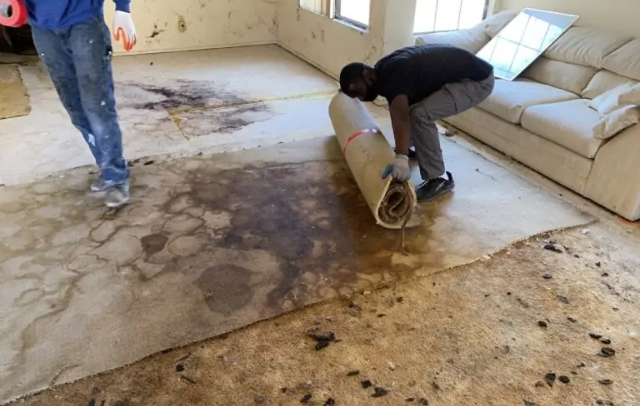
If carpet is heavily damaged or saturated, Residential Carpet Removal for Pet Odor Damage can be the cleanest route.
When the primary issue is dog accidents, you should also point users to your Dog Urine Odor Removal service page for the correct professional path.
Choosing the right solution for cat urine odor
When DIY might be enough for cat urine
DIY is most likely to work when the accident is fresh, the area is small, and you confirmed it did not reach padding or wall edges. That means quick detection, fast blotting, proper enzyme treatment, and full drying.
When cat urine typically needs structural solutions
Cat urine often needs deeper solutions when the odor keeps returning, when the pet has used the spot repeatedly, or when the hotspot is in corners and along baseboards.
In these cases, expect padding involvement, possible subfloor involvement, and sometimes wall edge involvement.
That is why cat urine fixes often combine more than one service.
Cat Urine Odor Removal for the odor treatment system
Odor Inspection and Detection to locate depth and boundaries
Subfloor Odor Sealing when the structure has absorbed urine
Drywall Odor Removal and Repair when wall edges are involved
Why some homes smell fine after cleaning and others do not
Two homes can have similar accidents and totally different outcomes because of materials.
Plush carpet and thick padding absorb more
Older wood subfloors can be more porous
Laminate seams can allow seepage under planks
Humidity patterns can reactivate odors more often
This is also why California pricing can vary, which we covered in Blog 6 about pet odor removal cost in California. The method and materials determine effort and permanence.
A simple decision checklist you can use right now
Answer each question honestly.
- Did the odor return after cleaning
- Is the smell stronger at floor level
- Did the pet use the area more than once
- Is the hotspot near a wall corner or baseboard
- Does humidity or heat make it worse
- Did you already try enzymes and it still returns
If you answered yes to two or more, you are likely dealing with padding, subfloor, or wall edge involvement. In that case, start with inspection and a targeted permanent plan rather than repeating surface cleaning.
How to prevent repeat accidents from undoing your work
Even after removal, prevention is important.
Block access while drying and curing
Remove or deep clean pet beds and soft items that may carry scent
Address litter box placement, stress, and medical issues for cats
Address potty schedule, door access, and training for dogs
If a pet keeps returning to the same spot, it is a signal that some odor trace remains, or the behavior trigger remains. Permanent odor removal and behavior management work best together.
FAQs
Which is harder to remove, dog urine odor or cat urine odor
Cat urine is often perceived as harder because it is commonly repeated in the same spot and often near wall edges, which increases depth and reactivation. Dog urine becomes equally difficult when it reaches padding and subfloor repeatedly.
Why does the smell come back after carpet cleaning
Carpet cleaning adds moisture. If residue remains in padding or subfloor, moisture can reactivate odor and push it back into the air.
Can I remove urine smell without removing the carpet
Sometimes for surface level accidents. But when padding or subfloor is involved, you often need access to the deeper layers to fix it permanently.
How do I know if the odor is in the wall
If the smell is strongest along baseboards or in a corner even after floor treatment, urine may have wicked into wall edges. In that case, drywall repair and odor blocking may be needed.
What is the fastest way to get a permanent result
Accurate detection first, then the correct structural solution based on depth. Odor inspection and detection helps map the source so you do not waste money on trial and error.